


A white graduation dress is the textbook worn-once garment: bought for one ceremony, worn for a few hours, then stored — which makes it one of the smartest items to buy secondhand and one of the easiest to resell after. In 2026 the numbers are simple: secondhand dresses cost $20–$60 against $80–$200 new, and a cleanly kept dress resells for 40–70% of new-equivalent value the following spring. Play both sides and the tradition costs almost nothing. This guide covers buying well, keeping the dress sellable, and the timing that gets it sold.
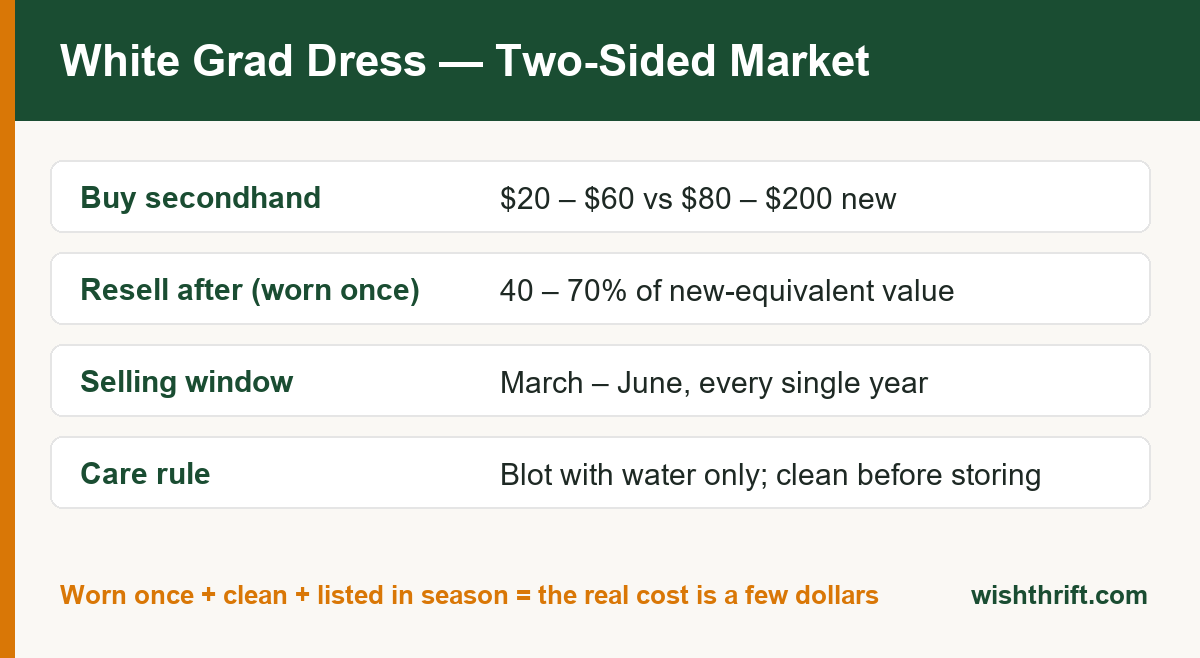
- Buy secondhand at $20–$60; equivalent dresses run $80–$200 new and most listed ones were worn once.
- Resell after: worn-once white dresses return 40–70% of new-equivalent value — list in the March–June window.
- The searched styles: satin slips, eyelet cotton, lace minis and midis, square necks — photograph well under a gown.
- Immediate stain care and clean storage are the difference between a relisting and a rag.
Why This Is the Perfect Secondhand Category
The white-dress graduation tradition creates a market with unusual mechanics: enormous synchronized demand every spring, garments that exit the market after a single wear, and owners with zero attachment once the photos are taken. Every June refills the supply that every following May consumes. That churn is why buying new at full price is the worst deal in the category — thousands of one-wear dresses in current styles are listed at a third of retail — and why selling after is so reliable: your buyer next spring is exactly who you were this spring. Unlike trend categories, demand regenerates annually on the academic calendar, forever.
Buying: Where the Value Is
Search early — six to eight weeks before the ceremony — while selection is deepest and before the seasonal rush lifts prices. The perennial silhouettes are satin slips, eyelet and broderie cotton, lace minis and midis, and square-neck styles that sit cleanly under an open gown and stand alone afterward. Filter by measurements rather than size labels (state yours in messages to sellers; formal sizing varies wildly by brand), and check each listing for the three white-dress specifics: underarm marks, hem grime and pulled zips. Ask for a daylight photo if the listing’s lighting hides the true white — off-white versus bright white matters under photographs. A $35 secondhand dress plus a careful eye beats a $120 new one in every way that shows in pictures.
The Two-Sided Price Table (2026)
| Style | Buy secondhand | Resell after (worn once, clean) |
|---|---|---|
| Satin slip and square-neck minis | $25–$50 | $20–$40 |
| Eyelet / broderie cotton dresses | $25–$55 | $20–$45 |
| Lace and occasion midis | $30–$60 | $25–$50 |
| Designer and boutique labels | $50–$120 | $40–$90 |
| Fast-fashion basics | $15–$30 | $10–$20 |
Bands are directional for mid-2026. Brand recognition compresses the buy-resell gap — known labels hold value best, which is an argument for buying them secondhand in the first place.
Wearing It Without Spending Its Resale Value
The dress’s second sale is decided on ceremony day. Blot spills immediately with water and a clean cloth — rubbing, and most on-the-spot chemical treatments, set stains permanently into white fabric. Hang the dress the moment the day ends rather than leaving it in a bag or on a floor. Within the week, wash or clean it exactly per the care label; sweat and invisible marks yellow over months in storage and are the single biggest killer of white-dress resale. Stored clean on a proper hanger away from sunlight, the dress lists as ‘worn once, excellent condition’ next spring — the exact phrase buyers filter for.
The Whole-Outfit Economy
The dress is the anchor, but graduation builds an entire one-day outfit, and every piece of it obeys the same worn-once economics. Nude and white heels — worn for four hours, photographed for two — resell reliably when listed clean with the sole condition shown. Clutches and small bags circulate the same way. Even the celebration-dinner outfit, bought new for the occasion, is a candidate. The habit worth forming is simple: after any milestone event, spread the outfit on the bed and ask which pieces will realistically be worn again versus which will sit in storage depreciating; list the second group within the month while the items are clean and the styles current. Households that adopt the habit effectively rent their occasion wear for the gap between buy and resell price — a few dollars per event — and the same logic scales up to every wedding, formal and reunion on the calendar.
Selling: Timing Is Most of the Price
List in the seasonal window — March through June — when every search in the category is live; the same dress in October waits months for a buyer the spring would have delivered in days. The listing itself is simple: daylight photos on a hanger (front, back, fabric close-up, any flaw), the brand and size plus bust and length measurements, and a title with the phrases buyers type — white graduation dress, satin mini, size and brand. Price using the resale column above and it will move. On WishThrift listing is free with no commission, so a $40 sale is a $40 sale — and if the ceremony wardrobe includes more than the dress, our prom dress and wedding dress guides cover the occasion-wear shelf with the same one-wear economics, while our 90s prom dress guide shows what the vintage end of the formal rack is worth.
FAQ: White Graduation Dresses
How much does a white graduation dress cost secondhand?
In 2026, secondhand white dresses suitable for graduation typically cost $20 to $60 — a fraction of the $80 to $200 the same dresses cost new. Popular silhouettes (minis, midis, satin slips, eyelet and lace styles) are listed by the thousand each spring by graduates from previous years, and most were worn exactly once, making secondhand the highest-value way to buy the tradition.
Can I sell my graduation dress after the ceremony?
Yes — and quickly, if you time it. Worn-once white dresses resell for roughly 40 to 70 percent of what an equivalent dress costs new, and demand runs strongest from March through June as each ceremony season approaches. Clean it, photograph it on a hanger in daylight, state the size and measurements, name the brand, and list while the season is live. A dress that cost $50 secondhand routinely resells for $30-$45 the following spring — making the real cost of wearing it a few dollars.
What style of white dress is best for graduation?
Whatever suits the ceremony and you — but the perennial searches are white minis and midis in satin, eyelet cotton and lace, plus slip dresses and square-neck styles that photograph well under a gown and stand alone at the celebration after. Comfort matters more than trend: ceremonies are long, often outdoors and frequently hot, which favours breathable fabrics and shoes already broken in.
How do I keep a white dress sellable while wearing it?
Three habits protect resale value: treat any stain immediately with water only (rubbing chemicals sets many marks), hang it up the moment the day ends, and wash or clean it per the care label before storing — invisible marks yellow over months. Stored clean on a hanger, a white dress lists like new the following season and returns most of what you paid.
Maya Chen is Senior Editor at WishThrift, where she writes about the global secondhand market, sustainable shopping, and the resale economy. Her work focuses on practical buyer guides — designer authentication, online thrift tactics, used-book hunting, and what to look for on every listing before you pay. She edits the WishThrift seller knowledge base and reviews every guide published on the site.
1 thought on “White Graduation Dresses: Buy Secondhand, Sell After — The 2026 Guide”
Comments are closed.