

A Von Dutch handbag — above all the logo-embroidered bowling bag — is one of the defining accessories of the Y2K revival, and in 2026 original 2000s examples sell for roughly $30 to $250 depending on style and condition. The brand’s story runs from a legendary hot-rod pinstriper to celebrity trucker caps to thrift-bin exile and back again, and the price of a bag today is mostly a question of which chapter it comes from and how well it survived. This guide covers the history, the buying checks, realistic prices and the selling angle while the revival holds.
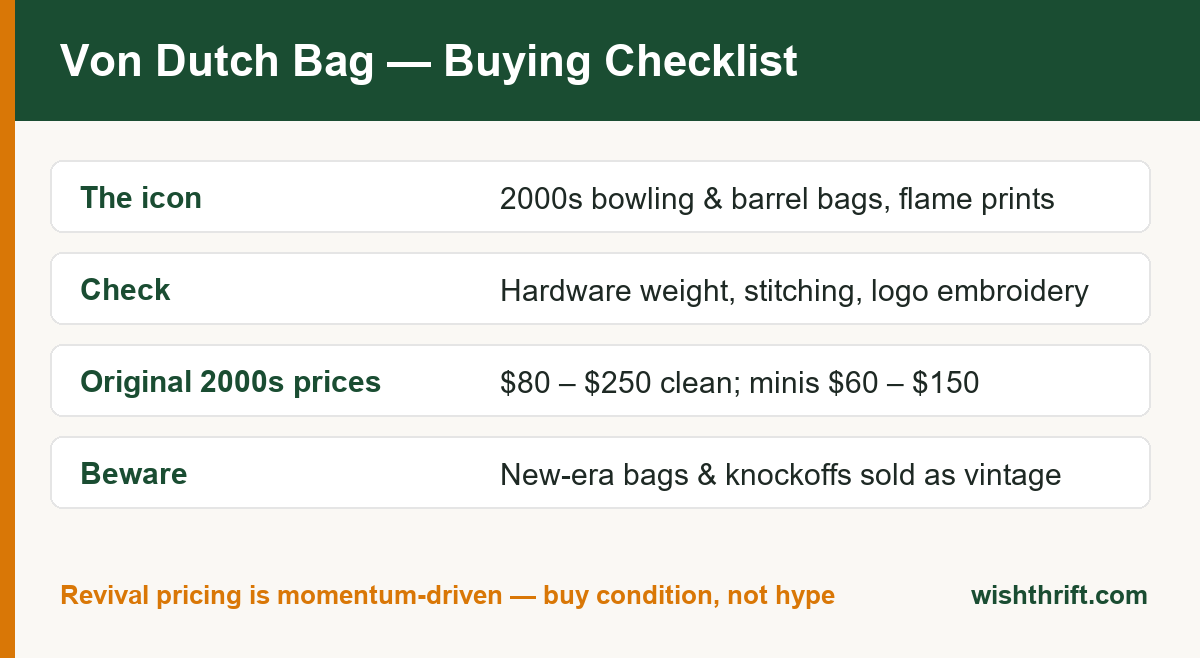
- The bowling bag is the icon: original 2000s examples bring $80–$250 clean, $30–$60 worn.
- Check construction over branding: hardware weight, embroidery density and zip quality expose knockoffs fastest.
- The brand still produces new bags — date the piece before paying vintage-original money.
- Revival pricing is momentum-driven: buy condition, sell while the trend is loud.
From Pinstripes to It-Bag
The name belongs to Kenny Howard, the mid-century California pinstriper whose flying-eyeball motif made him a legend of Kustom Kulture. The fashion label licensed his name decades later and detonated in the early 2000s: trucker caps on every celebrity, logo tees everywhere, and the bowling bag swinging from the era’s most photographed wrists. Then the trend died as hard as any in fashion history, and Von Dutch spent the 2010s as a punchline — until Y2K nostalgia flipped the joke. The same bags that couldn’t be given away in 2012 became revival grails, worn by a generation that experienced the first wave only as archive photos.
The Styles That Matter
The bowling bag. Structured, boxy, usually with contrast piping and the logo embroidered large — the piece everyone pictures and the one carrying the premium. Flame prints, bold colourways and leopard linings are era-correct and desirable.
Barrel and mini bags. Smaller, cheaper, easier to find; the entry point at $60–$150 for clean originals.
Everything else. Totes, shoulder bags and accessories exist across eras and reissues. They trade on condition and logo placement rather than rarity — price them like fashion bags, not collectibles.
Checking a Bag Before You Pay
Von Dutch occupies an awkward authentication tier: not luxury enough for serial numbers and authentication services, famous enough to be knocked off in both eras. So you judge the object itself:
- Hardware. Original bags used substantial zips, feet and clasps. Lightweight, rattly hardware is the fastest knockoff tell.
- Embroidery. The logo should be dense, even and sharp-edged — the same standard that exposes fake streetwear everywhere. Thin, fuzzy or misproportioned script fails.
- Construction. Straight stitching, clean piping, an interior label consistent with era examples. Compare against verified photos; styles varied, so the reference matters more than any single rule.
- Age logic. A twenty-year-old bag shows twenty years somewhere — corners, lining, zip pulls. Flawless plus vintage plus cheap is a story that doesn’t add up, the same price-logic test from our fake designer guide.
Note that the brand actively sells new bags trading on the revival. Nothing wrong with them — but they are current product, and a listing calling one vintage deserves the tag question before you pay an original’s premium.
Von Dutch Bag Prices (2026)
| Style / condition | Typical resale | Notes |
|---|---|---|
| Original 2000s bowling bag, clean | $80–$250 | Bold colours and flame prints top the band |
| Minis and barrel styles | $60–$150 | The accessible entry point |
| Worn originals (scuffs, lining wear) | $30–$60 | Still sell fast with honest photos |
| Current-production bags | Below retail | Describe as new-era; no vintage premium |
Bands are directional for mid-2026 and unusually momentum-sensitive — revival accessories reprice with the trend, in both directions. If you are buying to keep, that volatility is irrelevant; if you are buying to flip, build your margin at purchase and assume the window is measured in seasons, not years — trend accessories reward sellers who move while the searches are still climbing.
Caring for a Twenty-Year-Old Bag
Most surviving Von Dutch bags spent a decade in a wardrobe and another in a donation pile, so a little restoration goes a long way — and directly moves the price band. Surface grime on the era’s coated and leather-trim exteriors usually lifts with a barely damp cloth and mild soap; test a hidden corner first and never soak stitching. Interior lining odour, the most common complaint, responds to airing and a sealed container of baking soda for a few days. Stiff zips want a single pass of wax pencil, not oil, which stains fabric. Scuffed corners on dark bags can be honestly improved with matched leather balm, but resist the urge to repaint logos or piping — collectors read amateur touch-ups as damage, and an untouched honest bag outsells a badly restored one every time. Store it stuffed with paper to hold the structure, out of sunlight, and photograph it immediately after cleaning: the difference between a $60 listing and a $120 listing is often nothing more than an afternoon of this.
Styling and the Seller’s Window
The bag is the outfit’s exclamation mark: low-rise denim, a baby tee and the bowling bag is the full-strength Y2K look — our Y2K fashion guide and slouchy shoulder bag guide map the wider accessory landscape it sits in. If you own one from the first wave, understand the seller’s window: trend-driven prices are highest while the revival is loud, and originals are surfacing from closets daily. Photograph hardware, embroidery and corners honestly, title with style and era (Von Dutch bowling bag Y2K original), and list it free on WishThrift — on a $150 bag, zero fees means roughly $20 more in your pocket than typical platforms leave. Our selling handbags guide covers photography and pricing psychology for bags of every tier.
FAQ: Von Dutch Handbags
Are Von Dutch bags back in style?
Yes — the bowling bag in particular rode the Y2K revival back to it-accessory status in the mid-2020s, helped by celebrity sightings and the same nostalgia cycle that returned trucker hats and low-rise denim. Original 2000s bags now sell briskly secondhand, and the brand itself trades on the revival with new releases.
How much is a Von Dutch handbag worth?
In 2026, clean original-2000s bowling bags typically resell for $80 to $250, minis and barrel styles for $60 to $150, and worn examples with honest flaws for $30 to $60. Current-production bags resell below their retail price. Rare colourways and flame-print pieces in excellent condition can beat the top of the band — check sold prices for the specific style.
How can I tell an original 2000s Von Dutch bag?
Judge construction and details together: originals have substantial hardware, dense and even logo embroidery, quality zips, and interior labels consistent with the era. Compare against verified examples, since styles varied widely. Flimsy hardware, fuzzy embroidery or a too-clean bag claiming twenty years of age are the standard knockoff and misdating tells.
What made Von Dutch famous originally?
The name comes from Kenny Howard — ‘Von Dutch’ — the legendary mid-century Kustom Kulture pinstriper. The fashion brand licensed his name and flying-eyeball iconography, and in the early 2000s its trucker caps and logo pieces became celebrity uniform, making Von Dutch one of the defining labels of the Y2K moment — which is exactly why the revival returned to it.
Maya Chen is Senior Editor at WishThrift, where she writes about the global secondhand market, sustainable shopping, and the resale economy. Her work focuses on practical buyer guides — designer authentication, online thrift tactics, used-book hunting, and what to look for on every listing before you pay. She edits the WishThrift seller knowledge base and reviews every guide published on the site.