



A wedding dress from a current designer, worn once and in good condition, typically resells for 50-60% of its retail price – and the sooner you sell, the more you keep. The best places to list it in the US are a bridal specialist like Stillwhite (flat listing fee), a general marketplace like Poshmark (20% commission), or WishThrift, where listing is free and you keep 100% of the sale. This guide covers what your dress is actually worth in 2026, where to sell it, how to photograph it so it moves, and how to ship a gown safely.
What your wedding dress is worth in 2026
Four things set the price: the designer, the age of the dress, its condition, and whether the silhouette still matches what brides are shopping for. A recognisable designer name is the single biggest factor – brides search by designer and style name, so a Stella York or Essense of Australia dress with its style number in the title will always outsell an unlabelled gown of similar quality.
| Your dress | Typical resale |
|---|---|
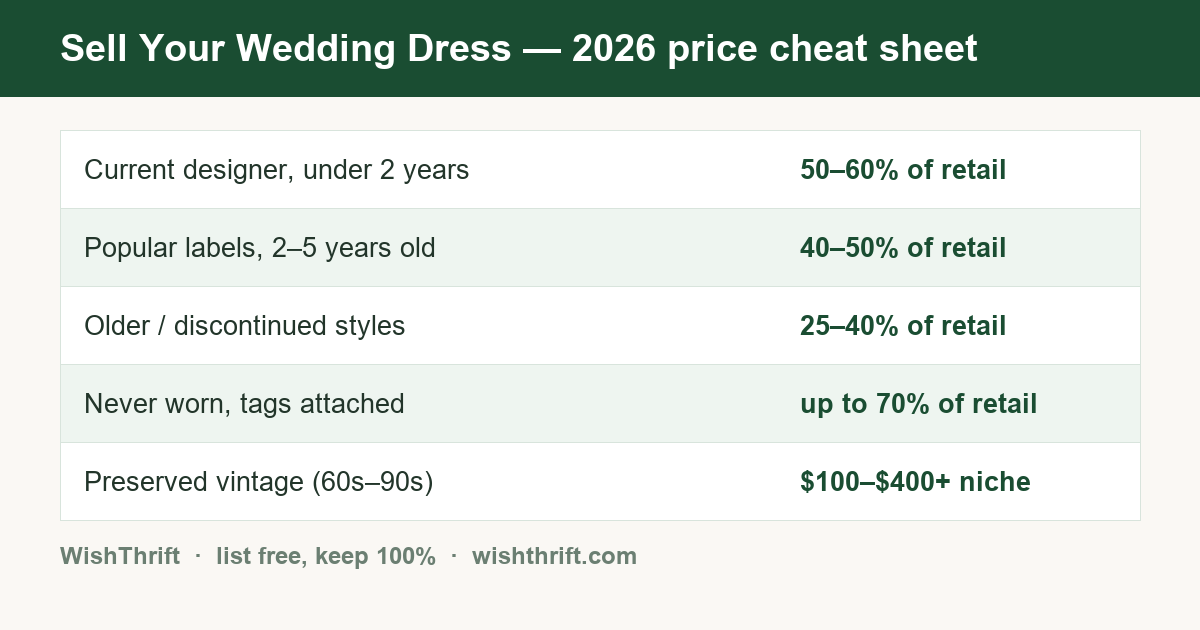
| Current designer style, under 2 years old | 50-60% of retail |
| Popular designer, 2-5 years old | 40-50% of retail |
| Older or discontinued styles | 25-40% of retail |
| Never worn, tags attached | up to 70% of retail |
| Preserved vintage (1960s-90s) | niche market, $100-$400+ |
Age matters because bridal trends move: clean minimalist crepe, square necklines and detachable sleeves are strong sellers as of 2026, while heavily embellished styles from a decade ago sit longer. Condition is the other lever – a dress that has been professionally cleaned, or is honestly described with photos of any marks, sells faster and with fewer returns-style disputes than one described as “worn once, should clean up fine”.
Where to sell a wedding dress online
| Platform | Best for | Seller cost |
|---|---|---|
| WishThrift | Any dress, any price point | No fee, keep 100% |
| Stillwhite | Bridal-only audience | Flat listing fee (~$25-$49), no commission |
| Nearly Newlywed | Designer gowns, hands-off | Commission around 40% |
| Poshmark | General fashion audience | 20% over $15 |
| eBay | Widest reach | ~13% final value fee |
| Facebook Marketplace | Local, try-on before buying | Free, local only |
Fees as publicly listed in July 2026 – confirm current rates before pricing.
Bridal specialists bring a focused audience but either charge upfront whether or not you sell, or take a large commission. On a $1,000 dress, a 40% commission is $400 – which is why many sellers list on a zero-fee marketplace first and use the specialist as a backup.
Your dress deserves a second aisle – and you deserve the full price. List it free in under two minutes.
How to prepare your dress for sale
Get it cleaned or price accordingly. A professional bridal clean costs $150-$300 in most US cities; if you skip it, say so clearly and let the price reflect it. Steam the dress before photographing – wrinkles read as neglect in photos, and photos are doing all the selling.
Photograph it worn if you possibly can. Dresses shown on a person (you, or a friend of similar size) consistently sell faster than hanger shots, because buyers are trying to imagine the fit. Take 8-10 photos in natural daylight: full front, full back, the train laid out, neckline detail, fabric close-up, the label and size tag, and honest close-ups of any marks or pulled threads.
What to put in the listing
Brides search very specifically, so give the listing everything: designer and style name/number, labelled size and the size it fits after any alterations, measurements (bust, waist, hollow-to-hem), the year you bought it, original retail price, whether it has been cleaned, and any alterations – a dress hemmed for someone 5’3″ in flats is a crucial detail, not a footnote. Mention a smoke-free home if you have one.
Shipping a wedding gown safely
Use a large, sturdy box – not a poly mailer – with the dress folded with tissue at each crease inside a garment bag or clean plastic liner. Ship tracked, insured for the sale price, with signature confirmation. Keep every message and payment on-platform, and never accept an “accidental overpayment” the buyer asks you to refund – that is the most common gown scam pattern. Our Help Centre covers safe payment methods in detail.
When to sell
Now beats later: every year off the wedding date moves your dress down a price tier. Demand peaks January through April, after engagement season, when the bulk of brides are dress-shopping 6-12 months out from their date – but wedding dresses sell year-round, so there is no reason to sit on one until January. If you are on the other side of the aisle and shopping, browse pre-loved women’s fashion on WishThrift or read our guide to selling designer clothes for the rest of the closet.
Keep 100% of your dress’s value – no commission, no listing fee, worldwide buyers.
Local pickup or shipped: which suits your dress?
Shipped sales reach the whole country and get you the strongest price, because you are no longer limited to brides within driving distance – but they demand careful packing and insured postage. Local sales through a marketplace listing with pickup suit heavier ballgowns and sellers who would rather let a buyer try the dress on; you will usually accept a little less for the convenience, and you should always meet somewhere public and take payment before handover. Many sellers run both at once: one listing, “shipped or local pickup welcome”, and let the buyer decide. Whichever you choose, keep the negotiation and the payment record on-platform so there is a trail if anything is disputed.
Five mistakes that keep wedding dresses unsold
1. Pricing from what you paid. Buyers compare against every other dress on the market, not your receipt – comp against sold dresses from the same designer tier. 2. Hanger-only photos. The single biggest fixable reason gowns sit unsold; borrow a friend for an hour. 3. No style number. Brides search “Essense D3029”, not “beautiful ivory gown” – without the number your listing is invisible to the most motivated buyers. 4. Hiding the flaws. A photographed mark with an honest note converts better than a surprise on delivery, which becomes a dispute. 5. Waiting for the “right season”. Brides buy year-round, and every year the dress ages a price tier – the best day to list is now.
One more honesty rule that pays: state clearly whether the dress has been altered. A hemmed or taken-in dress is not a problem – short brides exist in numbers – but an unmentioned alteration is the most common reason wedding dress sales go sour.
FAQ: selling your wedding dress
How much can I sell my wedding dress for?
Most dresses from current designers sell for 50-60% of retail if listed within two years of purchase, 40-50% at two to five years old, and 25-40% beyond that. Never-worn dresses with tags can reach 70%. Designer recognition, honest condition and a style-number-rich listing push you to the top of each range.
How long does a wedding dress take to sell?
Anywhere from days to several months. Well-priced dresses from searched-for designers, photographed worn, tend to sell within 4-8 weeks; demand peaks January-April after engagement season.
Should I clean my wedding dress before selling it?
Ideally yes – a professional clean ($150-$300) usually pays for itself in a faster sale at a higher price. If you sell it uncleaned, disclose that clearly and price it a tier lower.
Can I sell a wedding dress from 10 years ago?
Yes, but expect 25-40% of retail unless it is a timeless silhouette or has crossed into vintage appeal. Price against what similar dresses actually sell for, not what you paid.
Maya Chen is Senior Editor at WishThrift, where she writes about the global secondhand market, sustainable shopping, and the resale economy. Her work focuses on practical buyer guides — designer authentication, online thrift tactics, used-book hunting, and what to look for on every listing before you pay. She edits the WishThrift seller knowledge base and reviews every guide published on the site.