



Streetwear is the one clothing category where resale can beat retail: Supreme box logo pieces regularly sell above their original price, and sought-after collabs bring 70-120% of retail – but the platforms built for it take 9-13% of every sale. Selling direct on a zero-fee marketplace like WishThrift keeps the whole price, provided you do your own legit-checking and shoot proof-level photos. This 2026 US guide covers what’s actually moving, what your pieces are worth, the real fee math on Grailed and StockX, and how to list like a trusted seller.
What’s selling in US streetwear right now
As of mid-2026 the demand clusters are: vintage sportswear crossover (older Nike, Carhartt workwear worn as streetwear – see our vintage Nike guide), the long Y2K tail (baggy fits, graphic-heavy pieces), evergreen Supreme staples, and drop-culture labels like Corteiz and Stüssy whose limited runs keep resale hot. Fear of God Essentials has cooled from its peak – still liquid, but at 40-70% of retail rather than above it. Hype moves fast; check sold listings the week you sell, not the month you bought.
What your pieces are worth
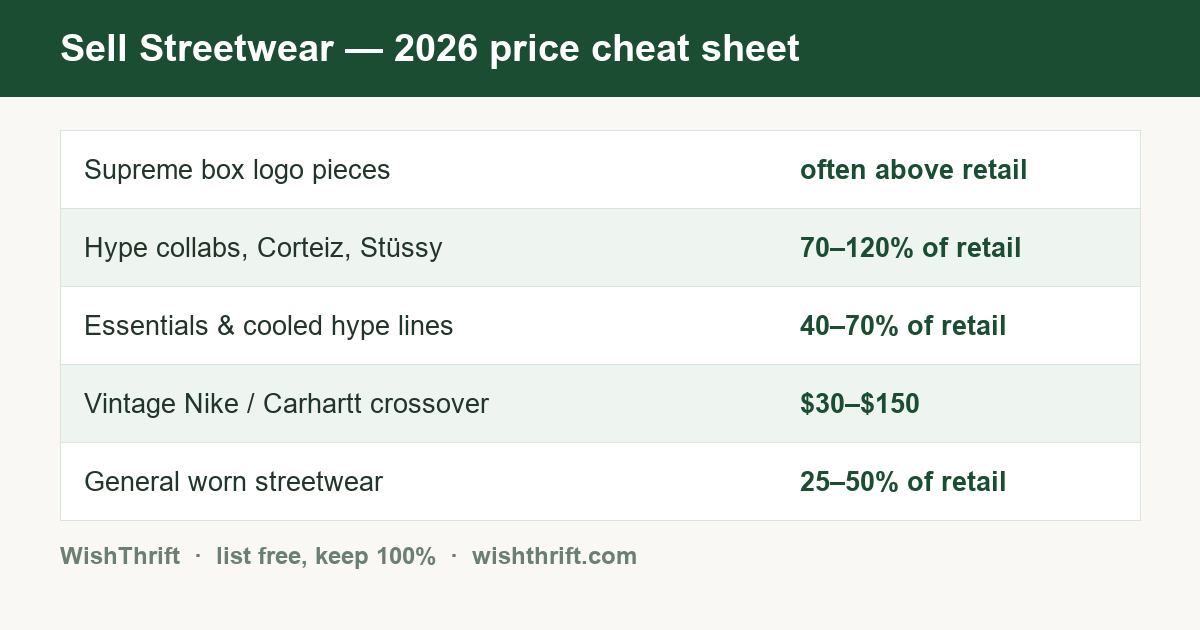
| Piece | Typical resale |
|---|---|
| Supreme box logo hoodies & tees | often above retail |
| Hype collabs, Corteiz, Stüssy limited runs | 70-120% of retail |
| Essentials & cooled hype lines | 40-70% of retail |
| Vintage Nike / Carhartt crossover pieces | $30-$150 |
| General worn streetwear | 25-50% of retail |
The fee math
On a $200 hoodie, at typical published rates as of July 2026:
| Platform | Typical seller cost | You receive |
|---|---|---|
| Grailed | 9% commission + payment processing | ~$175-$180 |
| StockX | ~9-12% all-in depending on seller level | ~$176-$182 |
| eBay | ~13% final value | ~$174 |
| Depop | No seller fee (buyer pays); ~3% processing | ~$194 |
| WishThrift | 0% | $200 |
Fees as publicly listed in July 2026 – confirm current rates before pricing.
StockX’s advantage is its authentication layer for hype pieces; Grailed’s is its audience of menswear buyers. If your piece is provable with photos – tags, stitching, receipts – the 9-13% you save selling direct is pure margin.
You did the hunting. Keep the whole flip. List your first piece free.
Legit-check your own pieces first
Streetwear is the most faked category in fashion, so sell the way you’d want to buy: photograph the neck tag, wash tag, and any holographic or security stitching; note where and when you bought the piece; include the receipt or order screenshot if you have one. Construction details – box logo stitching density, tag fonts, wash-tag country codes – are covered pattern-by-pattern in our guide to spotting fakes. Footwear seller? The same logic runs through our sneaker resale guide and Jordan 1 deep-dive.
Photos and the listing
Flat-lay on a clean neutral background in daylight: front, back, neck tag, wash tag, all four seams, and macro shots of any cracking on prints or pilling on fleece. Measure pit-to-pit and length flat and put both in the listing – streetwear sizing varies wildly across brands and eras, and measurements kill the #1 cause of disputes. Title with brand, piece, colorway and size the way buyers search: “Stüssy 8-ball fleece hoodie black L”.
Grade honestly, price from comps
Use the grading language buyers expect – NWT (new with tags), like new, excellent used, good used – and grade one notch harsher than you’re tempted to. Pull sold prices from StockX or Grailed for the exact piece and colorway, then price at or slightly under the going rate: with zero fees you can undercut the big platforms and still take home more than their sellers do. That is the whole arbitrage of selling direct.
Mistakes that cap your streetwear prices
Skipping measurements is the most expensive: vintage and Japanese sizing run small, boxy fits run large, and a listing without pit-to-pit numbers gets skipped by exactly the buyers who know what things are worth. Over-grading is second – calling a cracked print “excellent” earns a dispute, not a premium; the crack photographed close-up with “priced accordingly” earns trust and a fast sale. Ignoring the colorway in the title throws away search traffic, since drops are searched by name and colorway. And washing before selling cuts both ways: fresh is good, but never wash a piece with cracked or flocked prints aggressively right before sale – describe, don’t renovate.
Build a seller page worth following
Streetwear buyers follow sellers the way they follow brands. Keep your grading consistent, your flat-lays on the same background, and your drops batched – listing five pieces in one evening reads as a curated closet clear-out and pulls buyers deeper into your page. Cross-reference your own listings (“matching hoodie also listed”) and mention your buying context: “bought at the LA pop-up in 2023” is provenance, and provenance is price. On WishThrift a Verified Seller badge plus consistent honest grading does what a StockX authentication tag does elsewhere – except the 9-13% stays in your pocket. When sneakers are part of the closet, price them against the comps in our sneaker resale guide before listing.
Your pre-listing checklist
Before any piece goes live: brand, piece name, colorway and size in the title exactly as the drop was searched; pit-to-pit and length measured flat and stated in inches; neck tag, wash tag and any security features photographed sharp; print condition described with the standard vocabulary (no cracking / light cracking / heavy cracking); purchase provenance stated – store, pop-up, or resale with receipt; the exact piece checked against StockX or Grailed sold comps from the last 30 days, not asking prices; your price set at or just under the going rate, because with zero fees you can undercut and still net more; flaws macro-photographed and priced in; shipping method and cost decided before a buyer asks; and the piece stored flat, not stuffed in a bag, so it ships looking like the photos. Consistency across ten listings like this is what turns a one-off flip into a followed seller page.
FAQ: selling streetwear
Where is the best place to sell streetwear?
Grailed and StockX have the biggest hype audiences but take 9-13% all-in. A zero-fee marketplace like WishThrift keeps you the full price if you can document authenticity yourself with tag and receipt photos.
What streetwear brands hold resale value?
Supreme (box logo especially), limited Corteiz and Stüssy runs, and strong collabs hold or beat retail. Essentials and other cooled hype lines return 40-70%; vintage Nike and Carhartt crossover pieces sell steadily at $30-$150.
How do I prove my streetwear is authentic?
Photograph neck and wash tags, security stitching or holograms, and include purchase proof – a receipt or order screenshot. Specific construction details matched against known-authentic references convince experienced buyers more than the word “authentic” ever does.
Is streetwear resale still profitable in 2026?
Yes, but it’s pickier than the 2021 peak. Grails and limited runs still clear above retail, mid-hype pieces have settled to 40-70% of retail, and the profit increasingly lives in what you don’t pay in fees.
Maya Chen is Senior Editor at WishThrift, where she writes about the global secondhand market, sustainable shopping, and the resale economy. Her work focuses on practical buyer guides — designer authentication, online thrift tactics, used-book hunting, and what to look for on every listing before you pay. She edits the WishThrift seller knowledge base and reviews every guide published on the site.