



A Y2K-era Diesel mini skirt sells for $40–$90 in good condition in 2026, and the most wanted low-rise and logo-hardware styles bring up to $150 — which means the skirt sitting in a drawer since 2006 is now one of the easiest items in the house to turn into money. Diesel sits at the centre of the Y2K denim revival, demand is strongest for exactly the pieces the brand no longer makes, and clean examples sell within days when priced right. This guide covers what every style is worth, how to date yours, and the listing playbook that gets the top of the band.
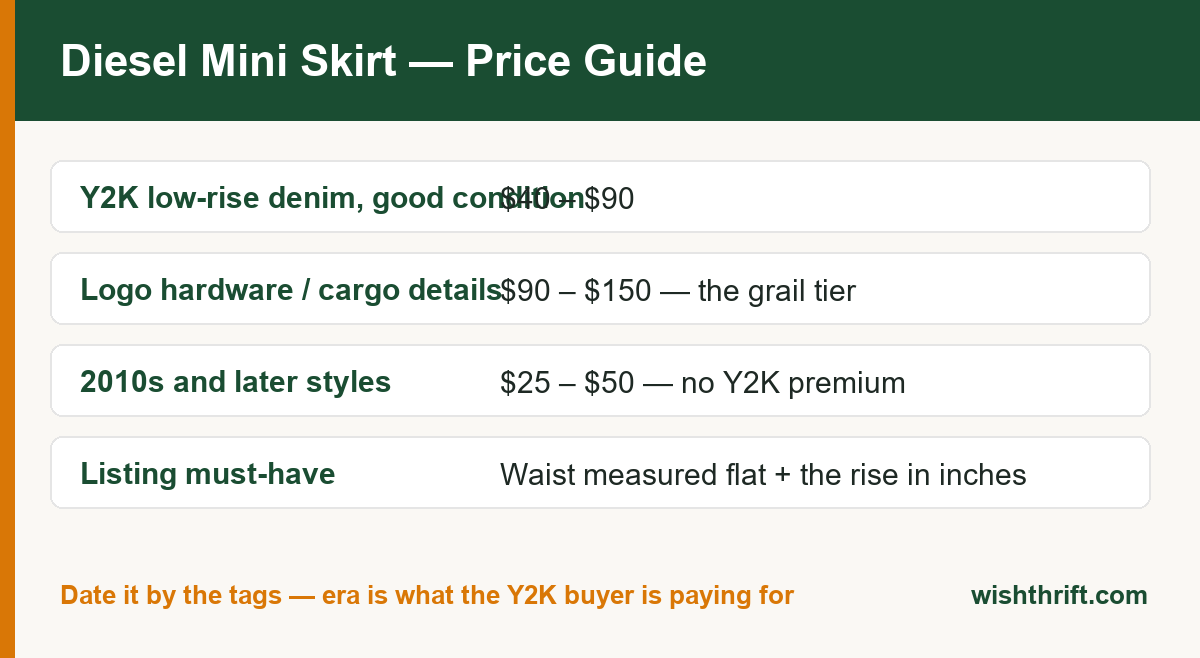
- Y2K-era Diesel denim minis: $40–$90 typical, $90–$150 for low-rise grails; later styles $25–$50.
- Date yours by the interior tags and the cut — very low rise plus heavy washing points to the 2000s.
- The waist measurement taken flat is the single most important line in your listing.
- On a $60 skirt, typical platform fees take $6–$12; listing free means you keep all of it.
Why Diesel Is the Y2K Label to Sell Right Now
Diesel was founded in Italy in 1978 by Renzo Rosso and spent the 2000s as one of the world’s most recognisable premium denim brands — the era of provocative ads, busy washes and low-rise everything. That archive became the Y2K revival’s shopping list, and the brand’s celebrated 2020s reinvention under Glenn Martens turned Diesel into a headline name again for a generation that then went looking for the originals. The result is textbook seller’s-market mechanics: demand growing, supply fixed in old wardrobes, and buyers who search by brand name daily. Denim minis are among the most searched pieces of that archive, because they photograph well, size flexibly and define the aesthetic in one garment.
What Every Style Sells For (2026)
| Style | Typical resale | Notes |
|---|---|---|
| Y2K low-rise denim mini, good condition | $40–$90 | The core market; whiskered and sandblasted washes do best |
| Logo hardware, buckles, cargo details | $90–$150 | The grail tier — era styling buyers cannot get new |
| Dark plain washes, mid rise | $30–$60 | Sells steadily on the brand name alone |
| 2010s and later styles | $25–$50 | Fine skirts; no Y2K premium — describe the era honestly |
| Flaws (broken zips, hem damage) | $15–$30 | Still sells disclosed — Y2K buyers repair and customise |
Bands are directional for mid-2026. Check a handful of sold listings for your specific style before pricing: distinctive pieces regularly beat the table.
Dating Your Skirt in Two Minutes
Buyers pay the premium for era, so establish it before you list. The interior tags are your evidence: Diesel’s label designs, wash-tag formats and made-in origins changed across the decades, and comparing yours against verified era examples online usually places a piece within a few years. The cut corroborates — a sub-8-inch rise, heavy distressing, contrast stitching and statement hardware are 2000s signatures, while cleaner minimal styling generally means later. Photograph every tag while you are at it: those images do double duty as dating evidence and authenticity proof in your listing. For the full method that works on any garment, see our clothing tag and RN number dating guide.
The Listing Playbook: Getting the Top of the Band
Five things separate a $45 sale from a $90 sale on the identical skirt:
- Measure, don’t size. Y2K sizing runs small and buyers know it. State the waist measured flat, the length, and the rise — the rise number is the Y2K buyer’s first question, so answering it up front wins the click.
- Shoot it worn or styled flat. Denim minis sell on silhouette. A styled flat-lay with a baby tee or an on-body shot outperforms a crumpled product photo several times over.
- Name the era and the details. Titles like “Diesel Y2K low rise denim mini, whiskered wash, size 26” contain every phrase buyers actually type.
- Show the tags. Brand tag, wash tag, size tag — three photos that answer authenticity and era without a word.
- Disclose flaws with photos. Y2K buyers accept honest wear; they punish surprises with returns and disputes.
Buying One: The Same Checks in Reverse
If you are on the hunting side, everything above flips into a buyer’s checklist. Ask for the rise measurement before anything else — listings that omit it are usually hiding a mid-rise 2010s cut behind Y2K keywords. Ask for tag photos and run the two-minute dating yourself rather than trusting the word vintage in a title. Check the zip, the hem and the button in the photos, since those are the three failure points on twenty-year-old denim. And know the arbitrage: thrift stores still price Diesel minis as generic denim skirts at $5–$8, because sorters recognise fabric, not labels — which means the flip from rack to listed is one of the friendliest first flips in the hobby. Our thrift flipping guide walks that exact route from first find to first sale.
Sell It Where You Keep All of It
Diesel minis are a volume Y2K item, and fees bite hardest in exactly this price range: a typical resale app takes $6–$12 from a $60 sale between commission and payment charges. WishThrift takes nothing — listing is free, there is no commission, and buyers message you directly. If you are clearing a whole Y2K wardrobe, list the pieces individually rather than bundling; skirts, low-rise shorts and going-out tops each have their own searchers, and our Y2K fashion guide shows what else from the same drawer is worth listing. For the general craft, our guide to selling used clothes online covers photography and pricing in depth.
FAQ: Diesel Mini Skirts
How much is a Diesel mini skirt worth?
In 2026, Y2K-era Diesel denim minis in good condition typically sell for $40 to $90, with the most wanted low-rise, distressed and logo-hardware styles reaching $90 to $150 to committed Y2K buyers. Later and simpler styles bring $25 to $50. Condition, rise and era set the price — a genuine early-2000s low-rise piece is worth roughly double a 2010s one.
How can I tell how old my Diesel skirt is?
Start with the interior tags: label design, wash-tag format and made-in country all changed over the years, and comparing yours against verified era examples usually narrows it to a period. The cut is strong supporting evidence — very low rises, whiskered washes, heavy hardware and busy pocket styling all point to the Y2K years. Our RN and tag dating guide covers the general method.
Why are Diesel skirts suddenly in demand?
Diesel is one of the defining labels of the Y2K denim revival. The brand’s 2000s pieces — low-rise, Italian-designed, distinctively washed — are exactly what the trend’s core buyers want but can no longer buy new, and the brand’s high-profile 2020s comeback under Glenn Martens pushed search demand for archive pieces even higher. Supply sits in wardrobes and thrift stores, which is why listings sell quickly.
Where is the best place to sell a Diesel mini skirt?
Anywhere with Y2K buyers — but fees decide what you keep. On typical resale apps a $60 skirt loses $6 to $12 to commission and payment charges. On WishThrift listing is free and there is no commission, so the full sale price is yours; photograph the front, back, tags and any flaws, state the waist measurement flat, and price inside the current bands for a fast sale.
Maya Chen is Senior Editor at WishThrift, where she writes about the global secondhand market, sustainable shopping, and the resale economy. Her work focuses on practical buyer guides — designer authentication, online thrift tactics, used-book hunting, and what to look for on every listing before you pay. She edits the WishThrift seller knowledge base and reviews every guide published on the site.