


A secondhand Miu Miu bag is worth $150–$800 in 2026 for most styles — and the difference between the top and bottom of that band is mostly condition and proof. Miu Miu spent the mid-2020s as one of fashion’s hottest brands, which pulled its whole archive up in value and pulled counterfeiters in behind it. Whether you are buying or selling, the same checkpoints decide everything: plaque, finishing, hardware, provenance. This guide covers the authentication method, values by style, and how to sell one for the most it will bring.
- Typical 2026 range: $150–$800; matelassé icons and recent-line bags top the band, worn everyday styles anchor the bottom.
- Founded in 1993 as Prada’s sister line — real bags carry Prada-group finishing, which fakes rarely match.
- Authentication order: logo plaque, interior finishing, hardware weight and engraving, then price logic.
- Selling: your photos are the authentication; plaque, lining and corner shots do more than any description.
Why Miu Miu Is a Seller’s Market
Miuccia Prada founded Miu Miu in 1993 as the Prada group’s younger line, and for years it was the fashion insider’s secret. The 2020s changed that completely: a run of era-defining collections made Miu Miu one of the most searched luxury brands in the world, and the halo covered everything the label had ever made — vintage 2000s bags included. Demand rose faster than secondhand supply, prices followed, and bags bought casually a decade ago became four-figure assets in wardrobes. If you own one, the market has quietly moved in your favour; if you are buying, the same heat explains both the prices and the fakes.
Authentication: The Four Checkpoints
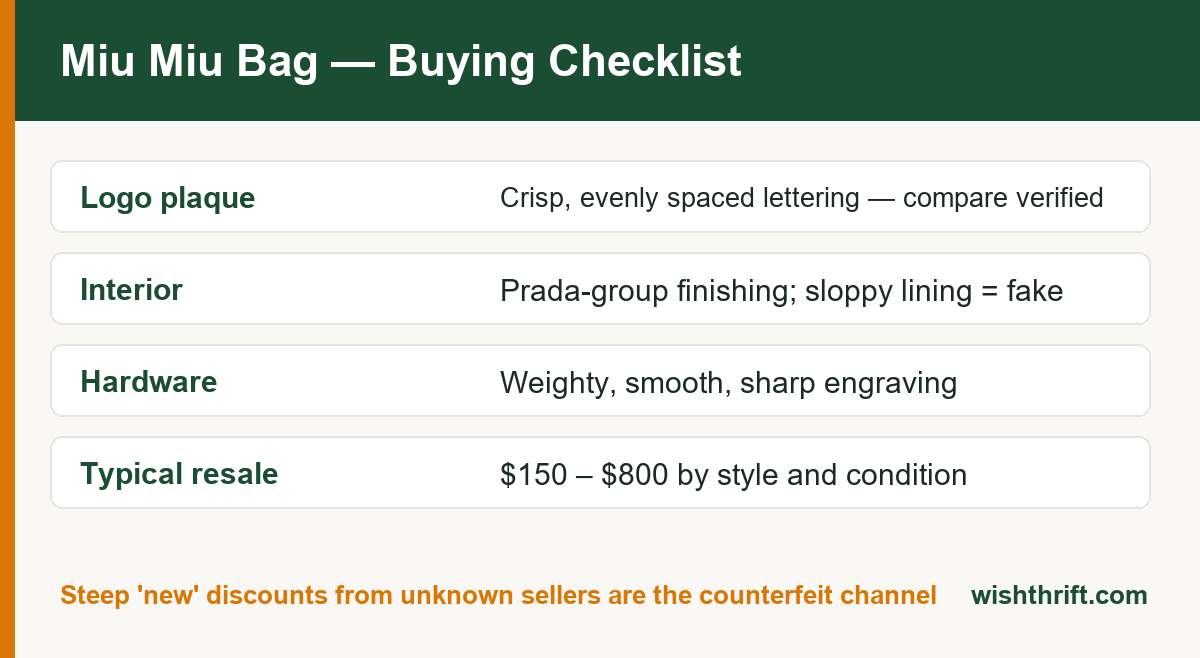
- The plaque and stamps. The metal logo plaque or heat stamp is where most fakes fail: lettering should be crisp, evenly spaced and correctly proportioned, with era-consistent placement. Compare against verified examples of the same style — plaque formats varied across years and lines, so the reference matters.
- Interior finishing. Real Miu Miu is finished like the Prada product it is: even stitching, clean edge paint, quality lining set without puckering. Sloppy interiors are the fastest disqualifier because counterfeiters economise where photos rarely reach.
- Hardware. Zips, clasps and feet should be weighty, operate smoothly and carry sharp engraving. Light, rattly or blurry-stamped hardware fails the bag.
- Papers and price logic. Authenticity cards and dust bags are fakeable and their absence proves nothing — but their details should at least match the era. And the oldest filter still works: steep ‘new’ discounts from unknown sellers are the counterfeit distribution channel, full stop.
The same discipline covers every luxury purchase; our fake designer guide generalises the method, and our Gaultier guide shows its clothing-side equivalent.
Values by Style (2026)
| Style / tier | Typical resale | Notes |
|---|---|---|
| Matelassé leather icons, good condition | $400–$800 | The signature quilted look; the most searched tier |
| Current-line styles, lightly used | $450–$800+ | Recent it-bags hold value best of all |
| Vintage 2000s styles | $150–$400 | Rising with the archive revival; era hardware is part of the appeal |
| Everyday leather and nylon styles | $150–$350 | Condition-driven; corners and edge wear set the price |
| Visible wear (corners, lining, odour) | Tier minus 30–50% | Still liquid — luxury buyers restore |
Bands are directional for mid-2026; individual archive styles run their own markets, so check sold prices for your exact bag before committing either way.
Selling: Proof Is the Product
Designer-bag buyers are buying certainty as much as leather, so build the listing around evidence. Photograph in this order: full front, plaque macro, hardware close-up, interior lining, base and corners, then every flaw honestly. State what you know of provenance — original receipt, store, year, authenticity card — and say plainly when you don’t have it; honesty prices better than silence in this market. Clean gently before shooting (dry cloth, empty pockets, stuff with paper to restore shape) but skip amateur restoration: colour touch-ups and DIY edge repainting read as damage to informed buyers. Price inside the tier for a fast sale or 10–15% above with patience, and expect informed buyers to message questions — quick, specific answers close designer sales more than any discount does.
Timing and the Archive Effect
Miu Miu’s market has a rhythm worth using. The brand’s fashion-week moments and viral pieces lift search demand for the whole label — including bags that have nothing to do with the current collection — so listing into one of those waves reliably shortens time-to-sale. The archive effect works on a longer clock: 2000s pieces that were simply old bags five years ago are now vintage Miu Miu, hunted by buyers priced out of the current line, and that tier is still repricing upward as the Y2K-adjacent audience discovers it. The practical read for an owner: a current-line bag sells best soon, while its value is anchored to a live retail price; a 2000s piece can be held without much fear, because its market is still forming. Either way, check what your exact style last sold for in the month you list — this brand moves faster than the tables can.
Keep the Whole Price
Fees are brutal precisely where bags are concerned: consignment platforms commonly take 20–40% of a designer bag’s sale, and even standard marketplaces take $40–$100 from a $500 bag between commission and payment fees. On WishThrift you list free, pay zero commission and keep the full price — on a matelassé at $600, that is real money staying in your pocket. Our selling handbags online guide covers the wider craft, and if the wardrobe holds more than bags, the designer clothes guide extends the same playbook.
FAQ: Miu Miu Bags
How much is a secondhand Miu Miu bag worth?
In 2026, most secondhand Miu Miu bags trade between $150 and $800 depending on style, era and condition: everyday leather styles and vintage 2000s pieces at the lower half, matelassé icons and current-line bags in strong condition at the upper. Sought-after archive styles from the brand’s 2020s peak years can exceed the band. Condition moves a bag a full tier in either direction.
How can I tell if a Miu Miu bag is real?
Work through the checkpoints: the logo plaque or stamp should show clean, correctly spaced lettering; interior lining, stitching and edge finishing should match luxury-house standards; hardware should be weighty with crisp engraving; and authenticity cards or dust bags, while fakeable, should at least be consistent with the era. Compare against verified examples of the same style, and apply price logic — heavily discounted ‘new’ Miu Miu from unknown sellers is the counterfeit channel.
Is Miu Miu part of Prada?
Yes. Miu Miu was founded in 1993 by Miuccia Prada as the Prada group’s younger, more playful line, and it is manufactured to the same house standards. That heritage is why construction quality is an effective authentication check: real Miu Miu is finished like a Prada product, and fakes almost never are.
Where is the best place to sell a Miu Miu bag?
Wherever your photos can do the authentication work and the fees don’t eat the price. Photograph the plaque, hardware, lining, corners and any flaws; state provenance if you have it (receipt, card, original purchase). Consignment platforms take 20-40% of a designer bag’s price; on WishThrift listing is free with no commission, buyers message you directly, and the full sale price is yours.
Maya Chen is Senior Editor at WishThrift, where she writes about the global secondhand market, sustainable shopping, and the resale economy. Her work focuses on practical buyer guides — designer authentication, online thrift tactics, used-book hunting, and what to look for on every listing before you pay. She edits the WishThrift seller knowledge base and reviews every guide published on the site.