

1700s fashion is 2026’s most unexpected trend revival – “piratecore” and Rococo-inspired collections have pushed searches for the era to highs, and the look translates to secondhand shopping for $10-$80 a piece: poet blouses, brocade waistcoats, velvet coats, corset-style tops and knee boots. This guide covers what people actually wore in the 1700s, why the runways brought it back, and exactly what to hunt secondhand to wear the look without slipping into costume.
What 1700s fashion actually looked like
The eighteenth century was the Rococo and Georgian era – the most decorated century in Western dress. Women wore boned stays (the ancestor of the corset), wide skirts over panniers, and silk gowns in pastel tones trimmed with lace and ribbon; the iconic French robe styles came with cascading fabric and layered lace sleeves. Men were just as ornamental: knee-length frock coats over embroidered waistcoats, breeches, buckled shoes and tricorn hats. Toward the century’s end, revolutionary-era simplicity swept in and the whole silhouette softened into lighter chemise dresses – but it is the decorated mid-century look, and its seafaring cousin from the Golden Age of Piracy, that fashion is quoting right now.
Why it’s trending in 2026
Two runway currents collided. First, piratecore: recent collections from houses including Dior, Alexander McQueen and Ann Demeulemeester have leaned into Golden-Age-of-Piracy references – dark velvet coats and vests, gold frogging, epaulettes, billowing shirts. Second, the Rococo revival: romantic 1700s-inspired florals and ruffles at labels like Simone Rocha and Max Mara. After a decade of Y2K and 90s nostalgia, fashion has simply run further back in time – and unlike most runway moments, this one is built from pieces that already exist in thrift inventories: velvet, brocade, lace and ruffles never stopped being donated.
The five pieces that make the look
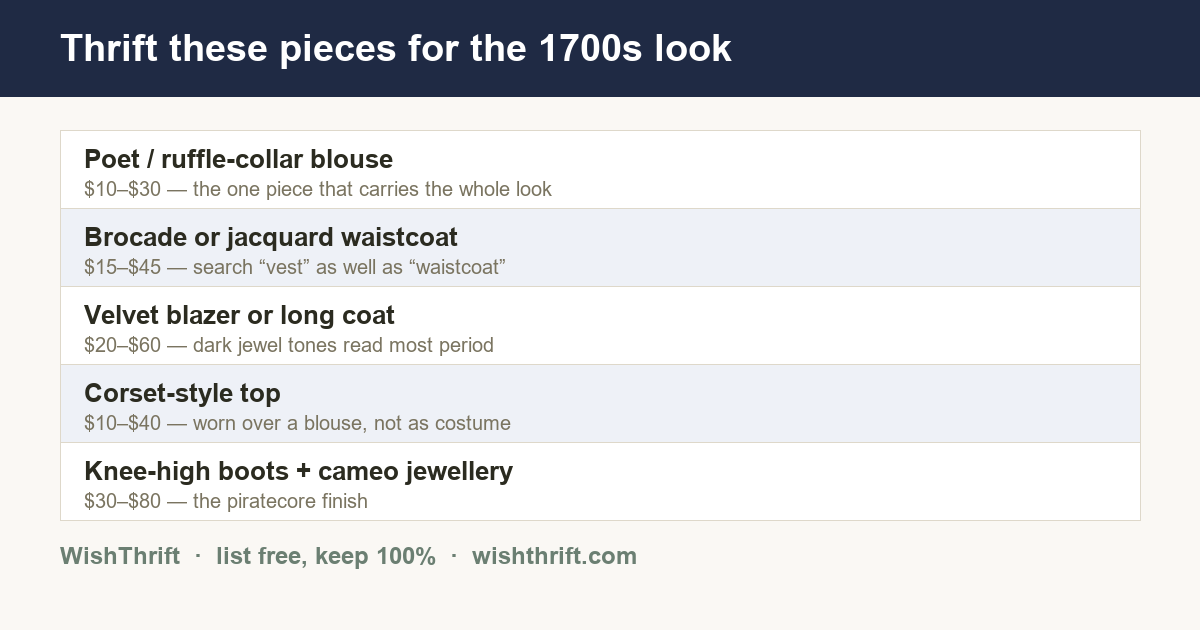
| Piece | Secondhand price | What to look for |
|---|---|---|
| Poet / ruffle-collar blouse | $10-$30 | White or cream, voluminous sleeves, ruffled cuffs – the single piece that carries the whole reference |
| Brocade or jacquard waistcoat | $15-$45 | Search “vest” too; metallic-thread florals read most period |
| Velvet blazer or long coat | $20-$60 | Jewel tones – bottle green, oxblood, midnight; gold buttons are a bonus |
| Corset-style top | $10-$40 | Worn over a blouse or tee, never as underwear-as-costume |
| Knee-high boots + cameo jewellery | $30-$80 | Slouchy leather or buckled; a cameo or pearl drop finishes it |
Search terms matter more than luck: try “poet blouse”, “pirate shirt”, “ruffle collar”, “brocade vest”, “velvet frock coat”, “corset top” and “steampunk” (adjacent listings often hide period-perfect pieces). Victorian- and Edwardian-tagged items frequently fit the 1700s look too – sellers rarely know their eras precisely, which is exactly why our vintage brands guide teaches label-reading over tag-trusting.
The 1700s look is already hanging on secondhand rails. Browse velvet, brocade and lace – worldwide, in your currency.
Wearing it without the costume effect
The rule for any historical revival: one period statement, everything else modern. A poet blouse over straight-leg jeans; a brocade waistcoat over a plain white tee; a velvet coat thrown over an entirely simple outfit. Two period pieces is an editorial look; three is a re-enactment. Keep the palette dark and rich for piratecore (black, gold, oxblood, forest) or pale and sugared for Rococo (cream, powder blue, blush) – mixing the two dilutes both. Hair and makeup stay contemporary; the 2026 version of 1700s fashion is a wardrobe quotation, not a portrayal.
Sellers: your velvet and brocade just became searchable
Trend revivals reprice closets overnight. That velvet blazer, ruffled blouse, corset top or brocade vest that has sat unworn is now what shoppers are typing searches for – and pieces described with the trend’s vocabulary (“poet blouse”, “piratecore”, “Rococo style”, “brocade waistcoat”) catch traffic that a listing titled “vintage top” never will. Photograph texture close-up – velvet pile, metallic thread, lace edges – because texture is the whole point of this trend. Listing is free on WishThrift and you keep 100%; our vintage selling guide covers dating and pricing older pieces.
Own velvet, brocade or lace? It’s trending. List it free while the searches are hot.
The men’s side of the revival
Piratecore is one of the rare historical revivals that lands harder in menswear. The 1700s were the last century in which men’s dress was flamboyant by default, and the 2026 translation keeps that energy wearable: an embroidered or brocade waistcoat over a plain shirt, a long dark overcoat with structured shoulders standing in for the frock coat, a billowing white shirt worn half-tucked, boots instead of sneakers. Secondhand racks are unusually kind to this look – formal waistcoats from decades of weddings and three-piece suits sell for $15-$45 because demand was historically thin, and vintage military-style coats with strong buttons carry the frogging-and-epaulettes energy the runways showed. For fabric quality at these prices, check the labels against our vintage brands guide – older formalwear is where dead-stock wool and silk hide.
Piratecore or Rococo: pick your lane
Shop the two moods separately. Piratecore is the dark, sea-worn palette – black, oxblood, forest green, tarnished gold – built on velvet, worn leather and heavy cotton; it suits fall and evening. Rococo is the sugared daylight version – cream, powder blue, blush – built on lace, ribbon and floral prints; it reads best in spring and summer pieces like tiered skirts and ruffled dresses. A saved search per lane (“velvet coat gold buttons” vs “ruffle lace blouse pastel”) keeps the feed focused, and knowing your lane stops the most common mistake of the trend: buying beautiful pieces from both and owning an outfit that belongs to neither.
FAQ: 1700s fashion
What was 1700s fashion called?
Mostly Rococo (the decorated early-to-mid century) and Georgian (the British term for the era). Women wore stays, panniers and silk gowns; men wore frock coats, embroidered waistcoats, breeches and tricorn hats. The century ended in the simpler neoclassical styles of the revolutionary years.
Why is 1700s fashion trending in 2026?
Runway collections revived it from two directions: piratecore (Golden-Age-of-Piracy references at houses like Dior, Alexander McQueen and Ann Demeulemeester) and Rococo-inspired romance at labels like Simone Rocha and Max Mara – fashion’s nostalgia cycle reaching past Y2K into pre-modern centuries.
How do I wear 1700s fashion without looking like a costume?
One period piece per outfit, styled against modern basics: a poet blouse with jeans, a brocade waistcoat over a tee, a velvet coat over anything plain. Keep hair and makeup contemporary and commit to one palette – dark piratecore or pastel Rococo, not both.
What 1700s-style pieces can I find secondhand?
Poet and ruffle-collar blouses ($10-$30), brocade waistcoats ($15-$45), velvet blazers and long coats ($20-$60), corset-style tops ($10-$40) and knee-high boots ($30-$80) – all long-standing thrift staples that predate the trend.
Maya Chen is Senior Editor at WishThrift, where she writes about the global secondhand market, sustainable shopping, and the resale economy. Her work focuses on practical buyer guides — designer authentication, online thrift tactics, used-book hunting, and what to look for on every listing before you pay. She edits the WishThrift seller knowledge base and reviews every guide published on the site.