
Vintage Polo Ralph Lauren is really three markets wearing one logo: everyday oxfords and polos that trade at $15–$40, the 90s sub-lines — Polo Sport, Polo Country, the Polo Bear knits — that bring $40–$600, and the early-90s capsule grails like Stadium and Snow Beach that reach four figures and attract fakes to match. Knowing which market a piece belongs to, from its tags alone, is the entire skill. This guide covers the tag-dating basics, realistic 2026 prices for every tier, and the buying and selling playbook.
- Three markets, one logo: everyday pieces $15–$40, 90s sub-lines $40–$600, capsule grails $500 into four figures.
- Date by tags in combination: main-label typography, made-in country, sub-line labels and fabric tags.
- Polo Bear knits are the accessible grail — $150–$600 by design — and the most faked tier after Stadium/Snow Beach.
- 90s hip-hop heritage plus the quiet-luxury revival keeps every tier liquid; RL is a check-every-time label on the rack.
Why Polo Is a Permanent Vintage Blue Chip
Ralph Lauren founded the brand in 1967 selling an idea of American style, and by the late 80s and 90s it had produced an enormous volume of genuinely well-made clothing. Then hip-hop rewrote the brand’s meaning: New York’s Lo-Life culture built entire identities around Polo, and when Raekwon wore the 1993 Snow Beach pullover in the Can It Be All So Simple video, a corporate capsule piece became streetwear scripture. Thirty years on, the audience is triple-stacked — hip-hop heritage collectors, vintage dealers, and quiet-luxury dressers buying the everyday pieces — which is why Polo holds value at every price point when most mall brands hold it at none.
Tag Dating: The Five-Minute Version
Serious collectors date Polo by comparing tags against verified references, but the working method fits in five lines:
- Main label: typography and layout evolved across the decades — learn the look of the eras you hunt and compare against verified examples.
- Made-in country: many older pieces were made in the USA; origin shifted over the years, so country plus label style narrows the window fast.
- Sub-line labels: Polo Sport, Polo Country, RL 67 and similar identify specific ranges — most of the 90s premium lives here, and the labels are unmistakable.
- Secondary tags: fabric-content tags, union labels on older garments and care-tag formats all corroborate the era.
- The garment itself: construction quality, fabric weight and hardware should match the claimed period — a flimsy knit claiming to be an early bear is answering its own question.
What Everything Sells For (2026)
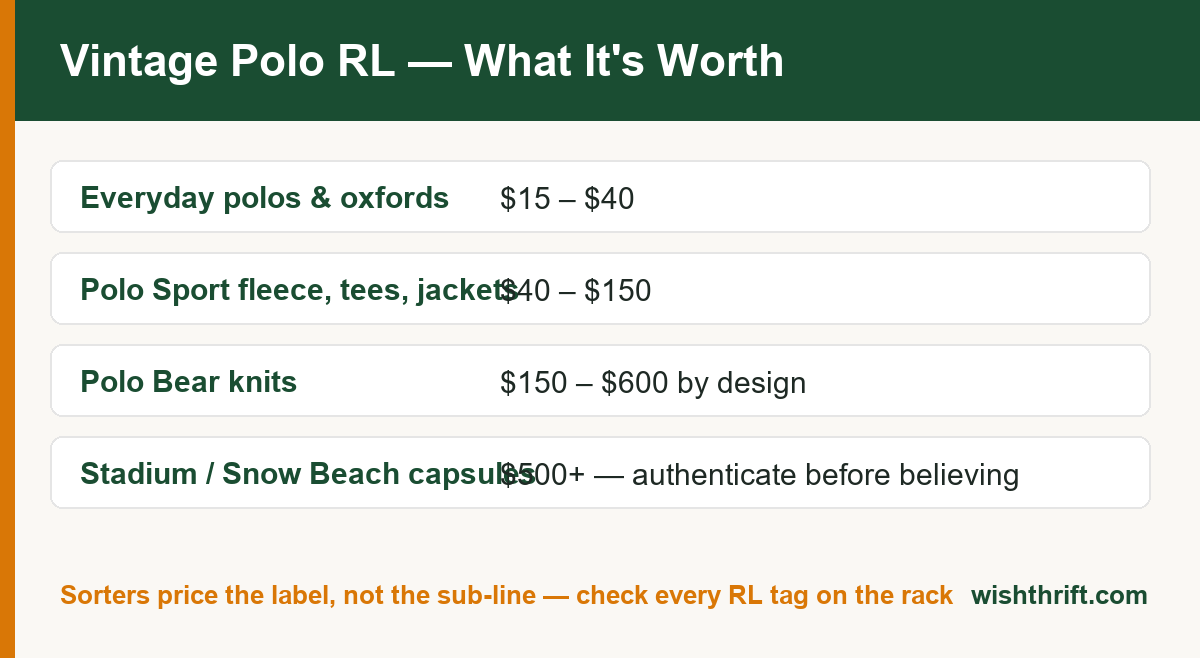
| Tier | Typical resale | Notes |
|---|---|---|
| Everyday polos, oxfords, chinos | $15–$40 | The volume market; condition and colour move it |
| 90s Polo Sport tees, fleece, jackets | $40–$150 | Flag-logo pieces lead; outerwear tops the band |
| Polo Bear knits and tees | $150–$600 | Design-dependent — certain bears far outsell others |
| Rugbies, heavyweight knits, USA-made staples | $40–$120 | Quiet-luxury demand keeps these climbing |
| Stadium (1992) / Snow Beach (1993) capsules | $500–$3,000+ | Grail territory; authenticate before believing anything |
Bands are directional for mid-2026. The grail tier moves on hype cycles and individual pieces, so check recent sold prices for the exact item before pricing either side of a deal. Two condition notes specific to this label: moth damage on knits is the value-killer to check first, holding a piece up to light before any money moves; and cracked or peeling flag prints on Polo Sport fleece drop a piece a full tier, where honest fade does not.
Fakes: Where They Concentrate
Counterfeiters go where the money is: Stadium, Snow Beach and bear knits. Everyday vintage Polo is rarely faked — the economics don’t work — so your vigilance should scale with the price. On grails, compare every label against verified examples, inspect embroidery density on bears (real ones are dense and detailed; fakes simplify the face), and apply price logic ruthlessly: nobody sells a real Snow Beach cheap. The method is the same one covered in our guide to spotting fake designer goods — label comparison, construction quality, then provenance questions.
The Everyday Tier Is the Real Opportunity
Grails get the headlines, but the reliable money in vintage Polo is the unglamorous middle: USA-made oxfords, heavyweight rugbies, cable knits and chinos that cost a few dollars thrifted and sell steadily at $15–$40 to buyers who simply want well-made classics. Quality is the engine — older Polo used substantial fabrics and construction that modern equivalents at triple the price rarely match, and the quiet-luxury audience buys exactly that argument. Volume matters too: unlike bear knits, this tier is everywhere, so a seller can build a consistent little pipeline rather than waiting for lightning. Two habits raise the hit rate. Learn the feel — old Polo oxford cloth and knitwear have a density you can recognise with your eyes closed, which lets you work a rack by touch. And check the kids’ and women’s sections: 90s boys’ XL fits a modern women’s medium, routinely surfaces bear and flag pieces, and is the least-picked-over corner of every thrift store in America.
Buying, Styling, Selling
At the thrift store, check the tag on every Ralph Lauren piece you touch: sorters price the label, not the sub-line, so bear knits and Polo Sport pieces still surface at oxford prices. Styling needs no instruction — that is rather the point of the brand — though the 2026 lean is oversized 90s pieces worn with the other blue-chip vintage labels rather than head-to-toe prep. Selling, lead your title with the sub-line and era (vintage Polo Sport, 90s Polo Bear), photograph every tag, and state measurements since 90s cuts run large. On a $200 bear knit, typical platform fees would take $25 or more — on WishThrift you list free and keep all of it. Our selling designer clothes guide covers the pricing psychology for the upper tiers.
FAQ: Vintage Polo Ralph Lauren
How do I date vintage Polo Ralph Lauren?
Read the tags together: the main label’s typography and layout changed across the decades, the made-in country narrows the era — with many older pieces made in the USA — and sub-line labels like Polo Sport or Polo Country identify specific 90s ranges on sight. Fabric content tags and union labels on older garments add further confirmation. Collectors date by comparing all of these against verified examples rather than any single rule.
What is the most valuable vintage Polo?
The early-90s capsule grails: 1992 Stadium and 1993 Snow Beach pieces — the latter made famous by Raekwon — trade in the hundreds to thousands when genuine, and are faked accordingly. Below those, Polo Bear knits regularly bring $150 to $600 depending on the bear design, and clean 90s Polo Sport carries a steady premium over everyday pieces.
Why is 90s Polo so collectible?
Because two cultures claimed it at once. Ralph Lauren sold aspirational American style, and 90s hip-hop — most visibly New York’s Lo-Life crews — adopted and remixed it into streetwear canon. That double heritage keeps demand deep across generations, and the quiet-luxury and Ivy revivals added a third audience for the everyday pieces.
Is vintage Polo worth buying at the thrift store?
It is one of the most reliable labels on any rack. Everyday oxfords, polos and chinos cost a few dollars and resell at $15 to $40, quality is genuinely good, and there is always a chance the sorter missed a bear knit or Polo Sport piece worth ten times the ticket. Check tags on every RL piece you pass — it costs seconds.
Maya Chen is Senior Editor at WishThrift, where she writes about the global secondhand market, sustainable shopping, and the resale economy. Her work focuses on practical buyer guides — designer authentication, online thrift tactics, used-book hunting, and what to look for on every listing before you pay. She edits the WishThrift seller knowledge base and reviews every guide published on the site.