


Yes – thrifted earrings are safe to wear, including pierced styles, as long as you disinfect them properly before the first wear. A wash in warm soapy water followed by a 5-10 minute soak in 70%+ isopropyl alcohol kills the bacteria that matter, and metal, glass and stone earrings tolerate that treatment perfectly. The only pairs worth skipping are porous ones – wood, fabric, cork and foam-backed clip-ons – because porous materials can never be fully disinfected at home.
Why secondhand earrings worry people (and what the real risk is)
Earrings feel more personal than a thrifted jacket because pierced posts sit inside healed skin, and it is fair to pause before putting a stranger’s jewellery through your ears. But the science is reassuring: the bacteria that cause ear infections need moisture and a host to survive, and they die off quickly on dry metal sitting in a donation bin or a seller’s drawer. By the time a pair reaches you, the load on it is low – and a proper disinfecting soak takes care of the rest.
The two risks that actually deserve your attention are different from the one most people imagine. First, hygiene on the day you buy: a pair that goes straight from the thrift bag into your ears without cleaning is the one scenario where transfer is plausible. Second, metal allergy: a large share of costume earrings – new or used – contain nickel, the most common contact allergen. Neither risk is a reason to skip thrifted earrings; both are managed in ten minutes at home.
How to clean thrifted earrings in 3 steps
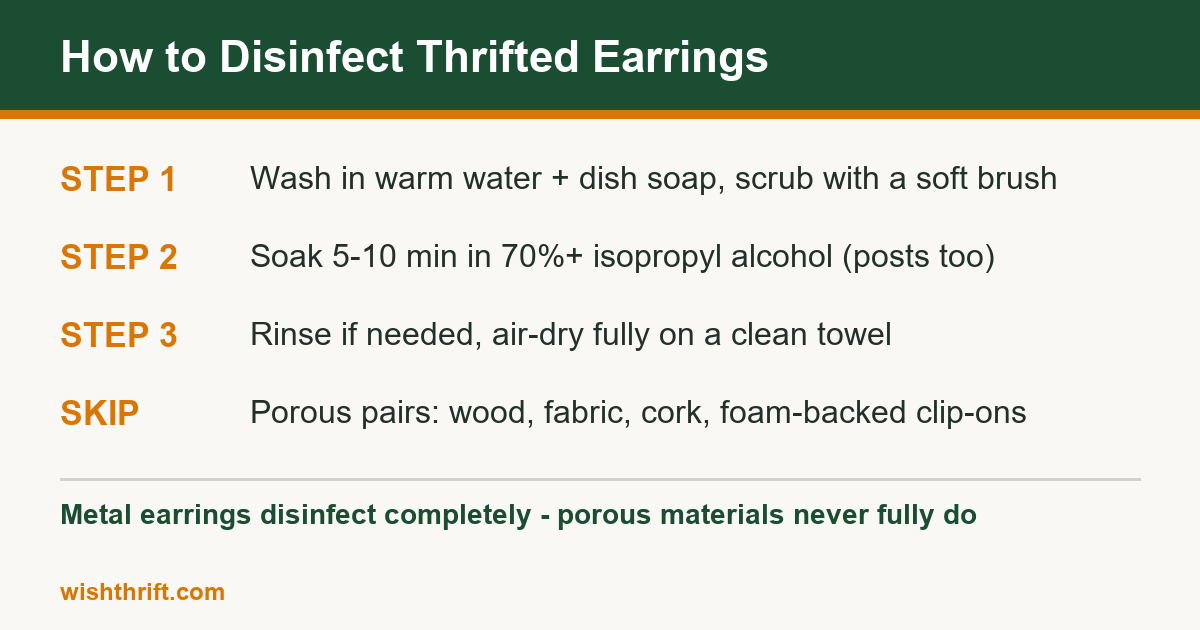
You need dish soap, a soft toothbrush, a small cup and a bottle of isopropyl alcohol (70% or higher) from any pharmacy. Here is the full method:
- Wash. Swirl the earrings in warm water with a drop of dish soap and scrub gently with a soft toothbrush, paying attention to posts, backs, hinges and crevices where old skin oils collect. This step removes the grime that would shield bacteria from the disinfectant.
- Disinfect. Submerge the entire earring – post, back and all – in 70%+ isopropyl alcohol for 5-10 minutes. Alcohol at this concentration disrupts bacterial cell walls and evaporates without residue. Three-percent hydrogen peroxide is a fine alternative for most metals; skip it on pearls, opals and foil-backed rhinestones.
- Dry. Lift the earrings out, rinse if you used peroxide, and let them air-dry completely on a clean towel before wearing or storing them. Moisture trapped against skin is what bacteria like – dry jewellery is inhospitable jewellery.
Which earring materials clean well – and which to skip
| Material | Safe to disinfect? | Notes |
|---|---|---|
| Gold, sterling silver (925), surgical steel | Yes – fully | The ideal thrift buys; non-porous and alcohol-safe |
| Glass, crystal, gemstones, resin | Yes | Alcohol-safe; dry foil-backed stones quickly |
| Costume metal alloys | Yes | Disinfects fine; check plating is not flaking |
| Pearls, opals, coral | Soap wash only | Alcohol dulls them; clean gently, wear on healed ears |
| Wood, cork, fabric, leather | No | Porous – surface-clean only, never fully sterile; fine as clip-ons, skip as pierced |
| Foam-backed clip-ons | Replace the pads | New foam pads cost pennies; the metal clip disinfects fine |
Check for metal allergy before you commit
Nickel allergy affects roughly one in ten people, and it does not care whether an earring is new or thrifted. Before buying, look for quality marks: 925 (sterling silver), 9K/10K/14K/18K/375/585/750 (gold), or listings that specify surgical steel, titanium or niobium – all safe choices for sensitive ears. On WishThrift you can simply ask the seller what the metal is before you buy; honest sellers photograph the hallmarks. If you fall for an unmarked costume pair anyway, a thin coat of clear nail polish on the posts is a well-known stopgap barrier – just reapply it every few wears.
When to pass on a pair
Some earrings are simply not worth the gamble, at any price. Leave behind: pairs with green or crusty corrosion on the posts, flaking or bubbling plating (the base metal underneath is usually nickel-heavy), pierced earrings made of porous materials, and anything with rust on the ear wires. None of these are fixable at home, and the same design almost always turns up again in better condition – that is the beauty of secondhand volume.
Buying secondhand earrings online, the smart way
Shopping thrifted earrings online is actually easier to do safely than digging through an in-store bin, because you can interrogate the listing before money moves. Zoom into photos of the posts and hallmarks, ask the seller about the metal and how the pair was stored, and favour sellers with ratings and verified badges. Browse the second-hand jewellery category on WishThrift to see what this looks like in practice – and if you are hunting designer pieces, our guide to spotting fake designer items covers jewellery hallmarks too.
And if this article has you eyeing your own jewellery box instead: clean pairs sell fast, because every buyer has read an article like this one. Our guide to selling jewellery online walks through pricing and photography – listing on WishThrift is free, with no selling fees.
Does this apply to other thrifted jewellery too?
Mostly, yes – and earrings are actually the strictest case, because posts pass through pierced skin. Necklaces, bracelets, brooches and rings only touch intact skin, so a soap wash plus an alcohol wipe is plenty for those; the porous-material caution relaxes as well, which is why a vintage wooden bangle is a fine buy even though wooden pierced earrings are not. Two extras worth knowing: check secondhand ring bands for rough solder repairs that can scratch, and run a necklace chain through your fingers to feel for kinks before buying. If a listing photographs well, the seller answers your metal questions, and the piece passes the corrosion check, secondhand jewellery is one of the highest-value categories in all of thrifting – the markup on new jewellery is enormous, and the used version is often identical.
One more habit worth keeping: re-clean your thrifted earrings every few weeks along with the rest of your jewellery, and store them dry. The disinfecting rules in this guide are really just good jewellery hygiene – secondhand only changes who wore them first.
Frequently asked questions
Can you get an infection from thrifted earrings?
Very unlikely if you disinfect first. Bacteria do not survive long on dry metal, and an alcohol soak kills what remains. The only risky move is wearing an uncleaned pair straight from the shop.
How do you disinfect secondhand earrings at home?
Soap wash, then a 5-10 minute soak in 70%+ isopropyl alcohol, then a full air-dry. Hydrogen peroxide (3%) works for most metals; keep both away from pearls and opals.
Are vintage earrings safe to wear?
Yes, once disinfected – metal, glass and stone pieces handle it perfectly. Replace the foam pads on vintage clip-ons and skip pairs with flaking plating.
Can thrifted earrings cause an allergic reaction?
Only in the same way new earrings can: nickel. Check for 925/gold/surgical-steel marks, ask the seller, and stop wearing anything that leaves ears itchy or red.
Maya Chen is Senior Editor at WishThrift, where she writes about the global secondhand market, sustainable shopping, and the resale economy. Her work focuses on practical buyer guides — designer authentication, online thrift tactics, used-book hunting, and what to look for on every listing before you pay. She edits the WishThrift seller knowledge base and reviews every guide published on the site.