



A vintage Oakley hoodie — meaning a piece from the brand’s late-1990s to mid-2000s technology-obsessed era — typically resells for $30 to $300 in 2026 depending on graphics, tags and condition. The revival is real: techwear and gorpcore pulled Y2K performance brands back into fashion, and Oakley’s industrial metal-logo aesthetic is exactly what that audience wants. This guide explains how to tell genuinely vintage Oakley from modern outlet product, which pieces carry the premium, and how to price one whether you are buying or selling.
- The value is in the era: late-90s and 2000s Software/Machine-period pieces are the grails, not modern logo fleece.
- Typical 2026 resale: $30–$70 plain embroidered logo, $60–$150 tech graphics, $150–$300 for rare collector pieces.
- Date a hoodie by its tag layout, logo treatment and graphic style — a current tag means it is not vintage.
- Condition of the fleece and ribbing matters more than surface wear; collectors accept cracked prints.
Why Vintage Oakley Is Back
Oakley was founded in 1975 and built its name on sports eyewear, but by the late 1990s the brand had wrapped itself in a full machine-age identity: metallic O logos, industrial product design and marketing that read like science fiction. That aesthetic dated badly in the 2010s — and then came all the way back around. The Y2K revival, the rise of techwear and gorpcore dressing, and a broader appetite for period sportswear turned old Oakley apparel from thrift-bin filler into a searched-for category. A hoodie that sat unsold at $6 in 2019 now gets picked up in minutes by resellers who know the logo.
What Counts as Vintage Oakley
The word vintage is doing heavy lifting in a lot of listings, so be precise. The pieces the market actually wants come from roughly the late 1990s through the mid-2000s — the period collectors loosely call the Software or Machine era, when tags, prints and embroidery all carried the brand’s technology styling. Three signals separate the real thing from modern product:
- The tag: older tags use period layouts and typography, and many apparel pieces from the era reference Oakley’s technology identity directly. A bright modern tag with current logo styling is recent outlet-line product.
- The logo treatment: era pieces favour the hard-edged, metallic-look O and machine-style typography. Soft, flat, minimal branding generally means newer.
- The graphics: tech schematics, industrial text blocks and heavy front-and-back prints are era-correct. A small plain embroidered logo can be either era, which is why the tag is your tiebreaker.
Fakes are not the main problem in this niche — mislabelled modern hoodies are. Plenty of sellers list current-decade Oakley fleece as vintage, and paying $80 for a $20 outlet hoodie is the actual trap.
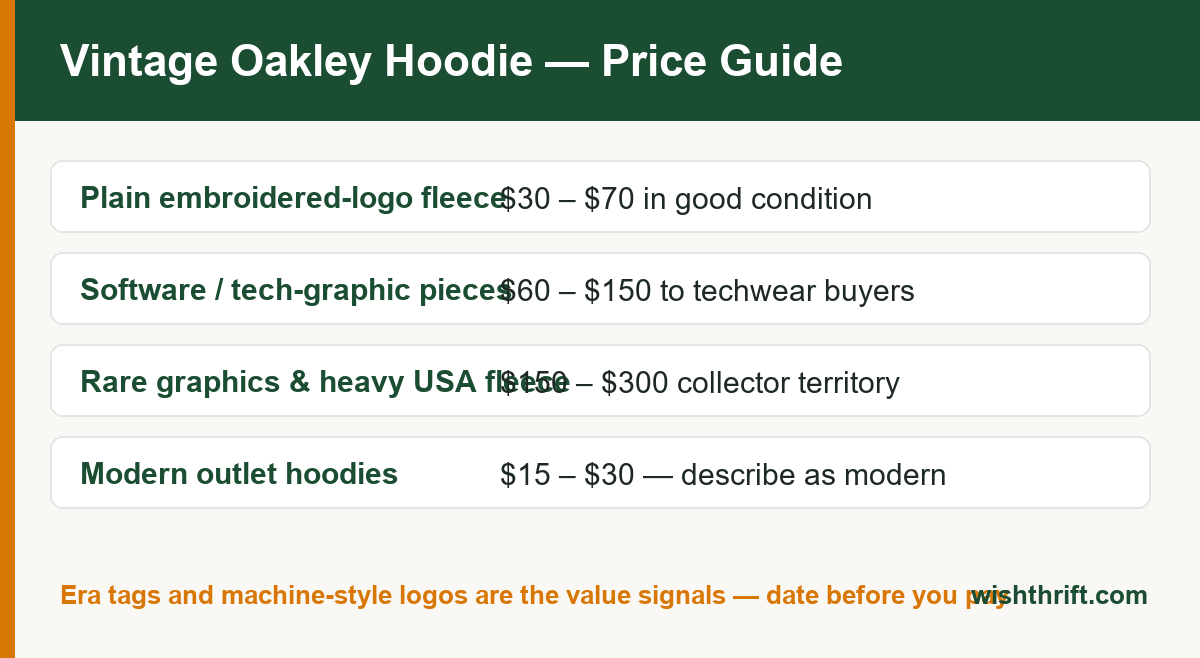
Vintage Oakley Hoodie Price Guide (2026)
These bands reflect what pieces actually sell for on peer-to-peer marketplaces in 2026, not aspirational asking prices:
| Piece | Typical resale | Notes |
|---|---|---|
| Plain embroidered-logo fleece, good condition | $30–$70 | The volume tier; colour and fit move it within the band |
| Era graphics / Software-style branding | $60–$150 | The techwear buyer’s target; front-and-back prints do best |
| Rare graphics, heavy USA-made fleece, standout colours | $150–$300 | Collector territory — photograph the tag prominently |
| Modern outlet hoodies | $15–$30 | Fine product, but describe and price it as modern |
| Damaged (stretched ribbing, thinned fleece) | $15–$40 | Cracked prints are acceptable; structural wear is not |
Prices are directional for mid-2026. The premium tier is thin and momentum-driven — if a piece looks special, check sold listings for that specific graphic before pricing.
Condition: What Collectors Forgive and What They Don’t
This market is unusually tolerant of surface age. A cracked screen print reads as authenticity, and light fade is fine. What kills value is structural wear: ribbed cuffs and hems that have lost their recovery, fleece gone thin at the elbows, drawcords missing, or zips replaced with mismatched hardware. When buying, ask for a photo of the cuffs pushed up your wrist would sit — stretched ribbing is the most common undisclosed flaw in old fleece.
How to Style It in 2026
The current look leans into the technical identity rather than hiding it: a graphic Oakley hoodie under a shell jacket with cargo trousers and trail shoes is the gorpcore standard, while the Y2K lane pairs it with baggy jeans and wraparound sunglasses. Old sportswear brands work best worn as period pieces — see our vintage Nike thrifting guide for the same logic applied to the biggest name in the category, and our Y2K fashion guide for the full-outfit context.
Where to Find Them
Supply is still out there, because Oakley sold apparel in real volume and most donors have no idea the old stuff appreciated. Thrift stores in the US remain the best hunting ground — check the plain-hoodie racks, since sorters file Oakley under generic sportswear, and always flip the tag on anything with an O. Online, the trick is searching the way uninformed sellers list: plain terms like Oakley hoodie or Oakley sweatshirt surface mislabelled vintage at modern-fleece prices, while informed-seller terms like vintage Oakley Software return the correctly priced pieces. Set alerts for both. Estate sales and garage lots in areas with surf, skate and motocross history over-index heavily — Oakley’s core customer of 2002 is exactly who is clearing out a garage in 2026. And check men’s and women’s sections both ways: old sportswear gets sorted by whoever is holding it, and a boxy medium reads as either.
Selling a Vintage Oakley Hoodie
Photograph the tag first — it is the single image that separates your listing from mislabelled modern fleece and justifies your price. Then shoot the graphic flat, the cuffs and hem close up, and any flaws honestly. Title with the era and style: buyers search combinations like vintage Oakley hoodie, Oakley Software and Y2K Oakley fleece. Include pit-to-pit and length measurements, because old sportswear sizing runs boxy. On a $100 piece, typical marketplace fees would take $10–$15; on WishThrift you keep all of it — list it free here. For the wider category playbook, our guide to the best things to resell for profit covers why era sportswear is one of the most reliable flips going.
FAQ: Vintage Oakley Hoodies
How do I know if an Oakley hoodie is actually vintage?
Check three things: the tag, the logo treatment and the graphics. Genuinely vintage pieces from the late 1990s and 2000s carry older tag layouts, often reference Oakley’s software and technology branding of that era, and use the hard-edged metallic O logo styling. A plain modern hoodie with a current tag is outlet-line product, not vintage, no matter how it is listed.
What is the Oakley Software era?
Around the late 1990s and early 2000s Oakley leaned into a machine-and-technology identity — the era of metal-look branding, industrial design language and tech-heavy graphics that collectors loosely call the Software or Machine era. Apparel from this period is what the techwear and gorpcore communities hunt, and it is where the real money in vintage Oakley clothing sits.
How much is a vintage Oakley hoodie worth?
In 2026, plain embroidered-logo fleece in good condition typically resells for $30 to $70. Pieces with era-correct tech graphics or Software-style branding usually bring $60 to $150, and rare graphics, heavy made-in-USA fleece or standout colourways can reach $150 to $300 from collectors. Modern outlet hoodies sell for $15 to $30 and should be described as modern.
Are vintage Oakley hoodies good quality?
Generally yes. The older fleece runs heavier than most modern mall-brand equivalents, and surviving pieces have already proved their durability over two decades. Check the cuffs, drawcord channel and print condition — cracked prints are accepted by collectors, but stretched ribbing and thinned fleece should lower the price.
Maya Chen is Senior Editor at WishThrift, where she writes about the global secondhand market, sustainable shopping, and the resale economy. Her work focuses on practical buyer guides — designer authentication, online thrift tactics, used-book hunting, and what to look for on every listing before you pay. She edits the WishThrift seller knowledge base and reviews every guide published on the site.