


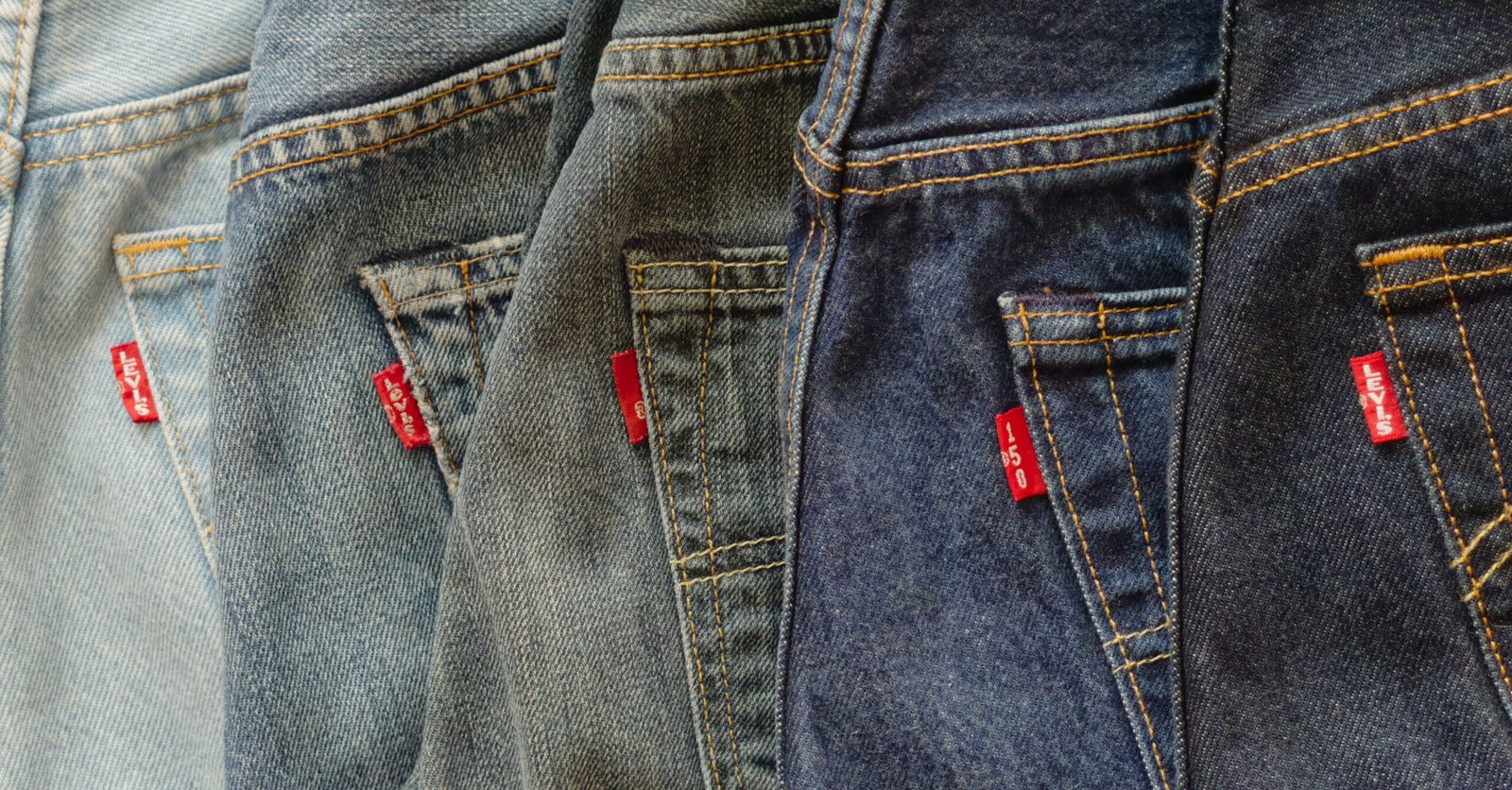
If thrifting has a holy grail, it is a pair of vintage Levi’s 501s. They are the original blue jean – the same five-pocket, button-fly, straight-leg cut that has been in continuous production since the 1890s – which means the racks of any thrift store, car-boot sale or online marketplace are quietly full of denim that ranges from ten-dollar basics to four-figure collector pieces. The trick is knowing how to read a pair. This guide walks you through dating vintage 501s, checking fit, working out what a pair is worth, and how to sell the ones you find.
Why vintage Levi’s 501s are worth thrifting
Three things make 501s the smartest denim to hunt. First, they were made in enormous numbers, so they turn up constantly secondhand. Second, older pairs are genuinely better made – heavier denim, sturdier stitching and, on the oldest examples, selvedge fabric woven on vintage shuttle looms. Third, demand is global and permanent: the vintage denim market spans Tokyo, Los Angeles and every corner of the resale world, and a clean pair from the right era sells fast. A $6 thrift find can be a $120 sale, and a rare early pair can be worth vastly more.
How to date a pair of 501s
You do not need to be an expert – a handful of details tell you roughly when a pair was made and how valuable it is.
The red tab
Look at the small red tab on the back-right pocket. If it reads “LEVI’S” with a capital E (“Big E”), the pair is from before roughly 1971 and is highly collectible. A lower-case “LeVI’S” (“little e”) means 1971 or later – still good, just more common.
Selvedge and the redline
Turn out the hem or the inside seam. A self-finished “selvedge” edge with a red line down it points to older, higher-grade denim (regular 501 production largely dropped selvedge in the early 1980s, though modern LVC reissues brought it back). Redline selvedge always adds value.
Rivets, stitching and the button
Hidden back-pocket rivets (covered by the fabric) date a pair before the late 1960s; exposed rivets came later. Single-stitch back pockets and a “V” of stitching at the fly also signal age. Flip the top button: the number stamped on the back (a factory code) helps confirm authenticity and era.
The care tag and country
A “Made in USA” tag is a strong plus – most 501 production moved overseas from the early 2000s, so USA-made pairs are older and more sought-after. The lot number and care details on the internal tag narrow the decade further.
Got a pair of Levi’s sitting in your closet? List it free on WishThrift and keep 100% of the sale – no listing fees, no commission, buyers worldwide.
Fit and sizing when you thrift 501s
Never trust the tag size alone. Vintage waistbands run true and can vary with wear, and shrink-to-fit pairs were sold oversized on purpose. Always measure the actual waist flat, doubled, across the top – and the inseam from crotch to hem. Because 501s are a straight, mid-rise cut, many buyers size up for the relaxed “dad” look that is popular now. If a pair is stiff, dark and marked “shrink-to-fit,” expect it to shrink an inch or two in a hot wash; a soft, faded pair has already done its shrinking.
What are vintage 501s worth?
| Type | Tells | Typical resale |
|---|---|---|
| Big E / pre-1971 | Capital-E red tab, hidden rivets, selvedge | $150 to $1,000+ |
| Redline selvedge (60s-70s) | Red selvedge line, single stitch | $120 to $400+ |
| 80s-90s Made in USA | Little-e tab, USA tag, no selvedge | $60 to $150 |
| Modern / overseas 501 | Recent tag, made outside USA | $25 to $60 |
Condition, size and colour hugely affect price – a clean, mid-blue pair in a common 30-34 waist sells fastest; rare sizes and deep indigo fetch more.
How to style vintage 501s
The reason 501s never date is that they go with everything. Cuff them over chunky boots or vintage sneakers, tuck in a plain tee or a band shirt, and add an oversized denim or Carhartt jacket for the full thrifted look. A slightly loose, straight 501 sits at the centre of the workwear, Americana and Y2K-adjacent styles all trending right now.
Care so they last (and sell for more)
Wash 501s rarely, cold, and inside out; hang to dry. Vintage denim develops its value from honest fades and whiskering, and hot washing or tumble drying kills both. If you are selling, a gentle wash and a photo in daylight showing the true colour and any wear will do more for your price than any filter.
Selling the pairs you find
Vintage 501s are one of the easiest things to flip because buyers already know exactly what they want. Photograph the red tab, the button number, the internal tag and the hem selvedge, state the flat waist and inseam measurements, and grade any flaws honestly. On WishThrift you list free and keep the whole sale – no commission taken out of that $120. For the wider method, see how to sell used clothes online, and to date denim jackets too, our vintage denim jacket guide.
Got an old pair of jeans sitting in your closet? List it free on WishThrift and keep 100% of the sale – no listing fees, no commission, buyers worldwide.
Where to find vintage 501s
Thrift and charity shops are the obvious starting point, but the denim-savvy cast a wider net. Outlet “bins” and by-the-pound stores reward patience with the lowest prices per pair. Estate, garage and yard sales often hide decades-old jeans a family never sorted through. Rural and small-town shops tend to carry older, less picked-over stock than city stores where resellers hunt daily. And once you know the tags, online marketplaces let you search by exact era – filtering for “Big E” or “redline” – and buy from sellers who have not realised what they are holding.
Mistakes to avoid when thrifting 501s
- Trusting the tag size. Vintage waistbands and shrink-to-fit pairs vary a lot – always measure the flat waist and inseam.
- Ignoring the damage that matters. Faded knees and honest whiskering are fine; a blown-out crotch, broken button fly or a re-hemmed leg kills the value.
- Over-washing before selling. A single hot wash can shrink a pair and fade away the exact character buyers pay a premium for.
- Skipping the ten-second tag check. A glance at the red tab, the button number and the inside seam is all it takes to turn a $10 pair into a $200 one.
- Assuming rare means valuable regardless of size. A Big E pair in an unwearable waist sells slower than a clean, common 32 – size drives demand.
Keep building your vintage wardrobe: once your 501 hunt is dialled in, our vintage corduroy pants guide and vintage leather jacket guide cover two more staples worth grabbing whenever you spot them on the rack.
501s are the gateway; the rest of the rail follows the same rules. How vintage clothing stores date, price and buy stock covers union labels, RN numbers, single-stitch hems and zip hardware — the same checks that separate a genuine pair of vintage 501s from a modern reissue.
FAQ
How do I know if my Levi’s 501s are vintage?
Check the red back-pocket tab: a capital-E ‘LEVI’S’ (Big E) means pre-1971 and highly collectible, while lower-case ‘e’ is 1971 or later. Redline selvedge on the inside seam, hidden back-pocket rivets, single-stitch pockets and a ‘Made in USA’ tag all point to older, more valuable pairs.
How much are vintage Levi’s 501s worth?
A common 80s-90s Made-in-USA pair typically sells for $60-150, redline selvedge pairs from the 60s-70s for $120-400+, and rare Big E pre-1971 pairs from $150 into the thousands. Condition, colour and a common waist size (30-34) make a pair sell faster.
What size vintage 501s should I buy?
Ignore the tag and measure the actual waist flat across the top (then double it) and the inseam. Shrink-to-fit pairs were sold oversized and will shrink in a hot wash; already-faded pairs have shrunk. Many people size up one or two inches for the relaxed straight-leg look.
Where can I sell vintage Levi’s 501s?
You can list them free on WishThrift and keep 100% of the sale – no listing fee or commission. Photograph the red tab, button number, internal tag and selvedge, give exact waist and inseam measurements, and grade any wear honestly to sell quickly.
Maya Chen is Senior Editor at WishThrift, where she writes about the global secondhand market, sustainable shopping, and the resale economy. Her work focuses on practical buyer guides — designer authentication, online thrift tactics, used-book hunting, and what to look for on every listing before you pay. She edits the WishThrift seller knowledge base and reviews every guide published on the site.
1 thought on “Vintage Levi’s 501 – Thrifting Guide (How to Spot, Date & Sell Them)”
Comments are closed.