
A Betty Boop shirt is either one of the millions of cheap reprints made since the 2000s — worth $10 to $25 — or a genuine 90s piece, where clean examples bring $30 to $80 and the airbrush-style streetwear grails reach $200. The character has been licensed since the 1930s, so the graphic alone proves nothing: dating the shirt is everything. This guide gives you the 60-second dating method, maps which styles carry the premium, and covers buying and selling at the right price.
- The graphic proves nothing — Boop has been printed for decades. Date the shirt: stitching, tag brand, licence line.
- Single-stitch hems plus a period King Features / Fleischer licence line are the vintage signals.
- The money is in 90s streetwear and airbrush-style graphics: $60–$200. Standard 90s tees: $30–$80. Reprints: $10–$25.
- Sizing is unreliable on 30-year-old blanks — measure pit-to-pit and length, always.
Why a 1930 Cartoon Rules the Vintage Rack
Betty Boop first appeared in Fleischer Studios cartoons in 1930, which makes her older than almost every band and brand in the vintage tee market. What matters for clothing is the 90s: a licensing boom put her on an enormous range of shirts — mall-store graphics, Harley-adjacent biker designs, and the airbrush-style street tees that borrowed their look from custom shop culture and hip-hop fashion. Thirty years later, that last group sits in the same collector lane as rap tees and cartoon grails, and the character’s constant presence in pop culture keeps minting new buyers. The result is a two-tier market: an ocean of modern reprints, and a shrinking pool of real 90s pieces worth many times more.
Dating a Betty Boop Shirt in 60 Seconds
Run every candidate through four checks:
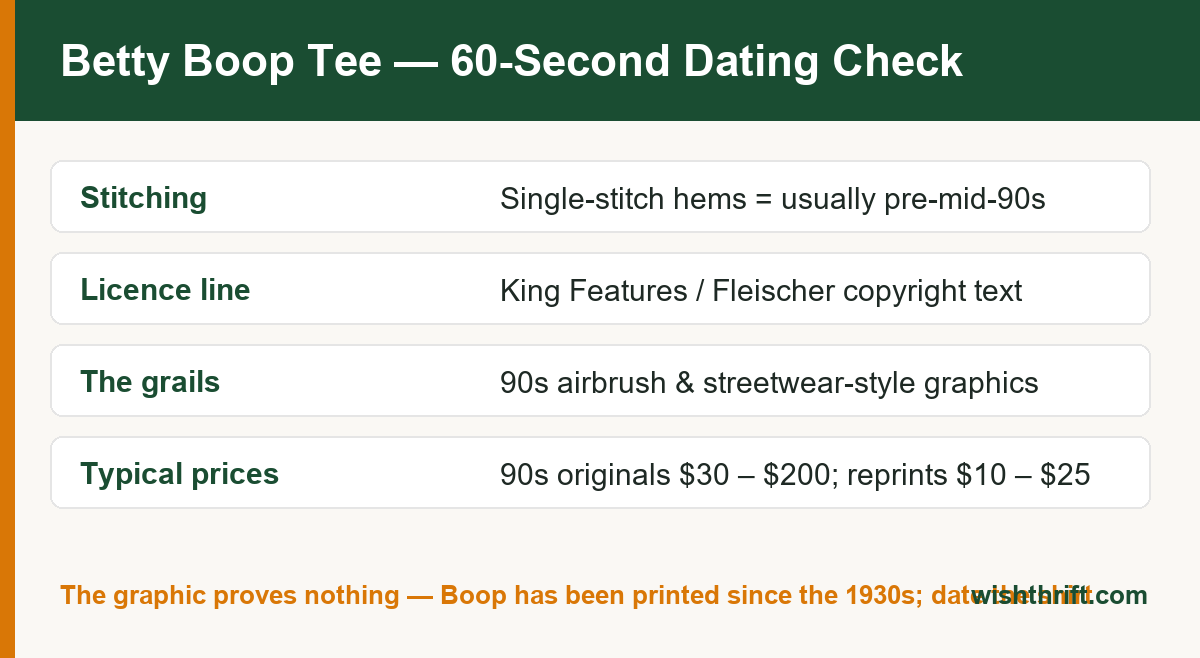
- Stitching. Single-stitch hems and sleeve ends generally indicate early-to-mid 90s or earlier; most manufacturing moved to double-stitch after that. It is a strong signal, not an absolute — combine it with the rest.
- The tag. The blank should be an era brand with a period tag layout. A famous 90s graphic on a modern soft-style blank is a reprint, whatever the seller calls it.
- The licence line. Officially licensed shirts credit the rights holders — look for copyright text referencing King Features Syndicate and Fleischer Studios, often with a year. No licence line means unofficial: common in the era’s airbrush culture (and collectible in its own right), but the distinction should be stated in a listing.
- The print itself. Real 90s prints and airbrush work age with the shirt — cracking, softness, slight fade. Perfectly crisp ink on bright fabric is telling you it is new.
The same logic covers every character and band shirt; our original-vs-reprint tee guide goes deeper on stitching eras and the copyright-date trap.
Betty Boop Shirt Price Guide (2026)
| Style | Typical resale | Notes |
|---|---|---|
| 90s airbrush / streetwear-style graphics | $60–$200 | The grails — big prints, hip-hop and city themes, biker Boop |
| Standard 90s licensed graphics | $30–$80 | Single-stitch mall and gift-shop tees in honest condition |
| All-over prints and ringer styles | $40–$120 | Less common formats carry a format premium |
| 2000s–present reprints | $10–$25 | Fine to wear; price and describe as modern |
| Damaged vintage (holes, collar stretch) | $15–$40 | Grail graphics still sell with flaws disclosed |
Bands are directional for mid-2026. For the top tier, check sold prices for the specific graphic — airbrush-style designs vary enormously and the best ones outrun the table.
Buying: Where the Deals Still Are
Thrift stores price almost every Boop tee the same, because to a sorter they all look like cartoon shirts — which means real 90s pieces still surface at reprint prices. Flip the hem and check the stitching before anything else; it takes two seconds and filters ninety percent of the rack. Online, ask sellers for tag and hem photos and a straight answer on the licence line. Condition tolerance is generous — fade and light cracking are part of the appeal — but check the collar, since stretched ribbing is the flaw buyers reject most.
Beyond Tees: The Rest of the Boop Economy
The character’s 90s licensing reach went far past t-shirts, and the adjacent categories follow the same dating rules with less competition. Sweatshirts and crewnecks with era graphics trade at a premium over equivalent tees because far fewer survived; check cuffs and collars the way you would any old fleece. Denim and satin jackets with embroidered or printed Boop artwork are the category’s quiet grails — biker-styled examples especially — and clean ones can outsell all but the best airbrush tees. Nightshirts, caps and bags surface constantly and cheaply; most are worth little, but they are useful practice for reading licence lines. One warning applies across all of it: the character’s enduring popularity means every category is still in production today, so the reprint problem never goes away. The dating method is identical whatever the garment — stitching era where applicable, tag brand, licence line, and honest signs of age in the print.
Styling and Selling
The 2026 way to wear one is straightforward: boxy 90s Boop tee, straight or baggy jeans, and let the graphic carry the outfit — it slots directly into the Y2K and 90s lanes without effort. If you are selling, photograph the hem stitching, the tag and the licence line — those three shots justify vintage pricing better than any description — and title with the era and style: vintage Betty Boop tee, 90s single stitch, airbrush. State measurements, disclose flaws, and price inside the bands above. On a $40 tee, typical platform fees would take $5 or more; on WishThrift you list free and keep it all. Our thrift flipping guide covers why character tees are one of the most beginner-friendly flips in the hobby.
FAQ: Betty Boop Shirts
How can I tell if a Betty Boop shirt is vintage?
Check the stitching, the tag and the licence line together. Single-stitch hems and collars generally point to the early-to-mid 90s or before; the blank’s tag should be an era brand; and genuine licensed shirts carry a copyright line referencing the character’s rights holders, such as King Features Syndicate and Fleischer Studios. A Boop graphic on a modern soft-style blank with no licence line is a recent print.
Which Betty Boop shirts are worth the most?
The 90s streetwear-style tees — airbrush-look graphics, hip-hop styling, big front-and-back prints and city or biker themes. Clean single-stitch examples of these regularly bring $60 to $200 in 2026. Standard 90s Boop graphics sell for $30 to $80, while the endless 2000s-and-later reprints trade at $10 to $25.
Why are Betty Boop tees collectible at all?
Betty Boop dates to 1930, which makes her one of the oldest licensed characters in fashion, and the 90s licensing boom put her on thousands of shirt designs across every subculture — mall tees, biker shirts and street styles alike. The best 90s graphics sit right beside rap tees and cartoon grails in the vintage tee market, and supply of clean survivors keeps shrinking.
Do vintage Betty Boop shirts run small?
Yes, treat sizing as unreliable. 90s blanks were boxier than modern cuts, shrinkage over three decades is normal, and many of the best pieces were printed on 50/50 cotton-poly blanks that fit tight by today’s standards. Buy and sell by pit-to-pit and length measurements, never by the size printed on the tag.
Maya Chen is Senior Editor at WishThrift, where she writes about the global secondhand market, sustainable shopping, and the resale economy. Her work focuses on practical buyer guides — designer authentication, online thrift tactics, used-book hunting, and what to look for on every listing before you pay. She edits the WishThrift seller knowledge base and reviews every guide published on the site.